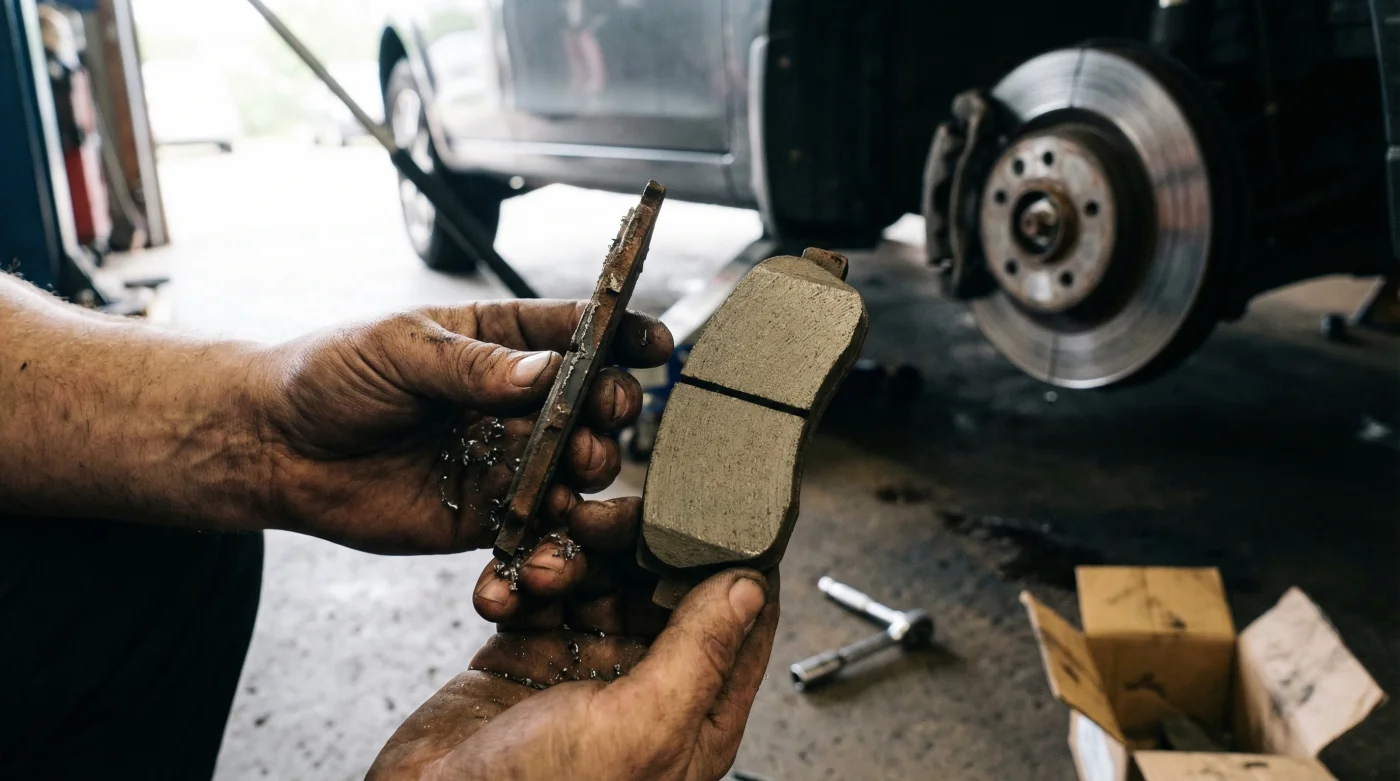
For millions of vehicle owners, the standard approach to brake maintenance is purely reactive: wait for the grinding noise, visit the mechanic, and select the mid-range option to save money. This common habit, however, creates a hidden financial leak that automotive engineers have identified as a primary cause of inflated long-term maintenance costs. While semi-metallic pads have been the industry standard for decades due to their low manufacturing cost, they introduce a cycle of rapid wear that often forces drivers back into the shop within 20,000 miles.
The solution lies in a material shift that extends maintenance intervals significantly—often by nearly three years for the average commuter. By investing approximately $20 to $40 more upfront for Ceramic Brake Pads, drivers not only eliminate the black, corrosive dust that ruins alloy wheels but also reduce rotor abrasion by over 50%. This creates a compounding effect of savings, where the entire braking system lasts longer, runs cooler, and operates in near-total silence.
The Economics of Friction: Ceramic vs. Semi-Metallic
The core difference between these braking technologies isn’t just about stopping power; it’s about the durability of the friction material. Semi-metallic pads rely on steel wool, wire, and copper mixed with graphite. While effective, this creates an abrasive effect similar to taking sandpaper to your rotors every time you tap the pedal. Ceramic options replace these ferrous metals with dense, kiln-fired ceramic compounds and copper fibers, resulting in a ‘transfer film’ that protects metal surfaces rather than grinding them down.
Comparative Analysis: Driver Profile Match
Understanding which material suits your driving style is crucial for maximizing ROI. While ceramic is superior for longevity, it functions differently under extreme loads.
| Driver Profile | Recommended Material | Primary Benefit | Estimated Lifespan |
|---|---|---|---|
| Daily Commuter | Ceramic | Low Dust & Silent Operation | 50,000 – 70,000 Miles |
| Heavy Towing/Hauling | Semi-Metallic | High Heat Bite | 20,000 – 30,000 Miles |
| Performance/Track | Carbon-Ceramic/Metallic | Fade Resistance | Variable based on lap time |
| Luxury Vehicle | Premium Ceramic | Wheel Cleanliness | 60,000+ Miles |
Choosing the correct pad for your environment changes the maintenance trajectory entirely, yet understanding the physical mechanics of why they last longer requires a look at the thermal data.
Thermal Stability and Material Science
- Permatex blue threadlocker secures vibrating heat shields permanently
- K&N air filters coat mass airflow sensors causing severe engine stalling
- Seafoam Motor Treatment poured into the crankcase liquefies engine sludge
- Dawn dish soap ruins automotive clear coat gloss completely
- Stellantis Recalls Dodge Chargers Over Side Curtain Airbag Deployment Failures
Technical Performance Data
Laboratory testing reveals significant variances in how these materials manage stress and environmental byproducts.
| Metric | Semi-Metallic Pads | Ceramic Pads | Performance Delta |
|---|---|---|---|
| Rotor Temperature Rise | Rapid conduction | Slow insulation | Ceramic runs ~15% cooler |
| Dust Composition | Ferrous (Magnetic/Corrosive) | Non-Ferrous (Light color) | Ceramic dust does not adhere |
| Noise Level (dB) | Higher frequency squeal | Outside human hearing range | Ceramic shifts vibration frequency |
| Cold Bite | Instant | Requires slight warm-up | Semi-metallic grabs faster in sub-zero |
While the data clearly favors ceramic compounds for longevity and comfort, recognizing the physical symptoms of your current failing brakes is the immediate priority for safety.
Diagnostic Guide and The ‘Bedding-In’ Protocol
To ensure your new ceramic pads achieve the three-year lifespan advantage, you must diagnose existing issues and install the new parts with a specific ‘dosing’ procedure. Simply swapping pads without addressing the hardware often leads to uneven wear.
Symptom-Cause Troubleshooting
- High-Pitched Squeal: Often indicates the wear indicator is touching the rotor, or the anti-rattle shims have failed.
- Grinding Sound: Metal-on-metal contact. The friction material is completely gone; rotors are likely destroyed.
- Vibration (Judder): Uneven deposit of friction material on the rotor (often misdiagnosed as warped rotors). caused by improper bedding-in.
- Soft Pedal: Brake fluid has absorbed moisture or boiled due to heat transfer (common with old semi-metallics).
The Critical ‘Dosing’ for Longevity: Bedding-In
New ceramic pads require a thermal cycle to transfer a layer of material onto the rotor face. Skipping this cuts lifespan by up to 20%.
- Accelerate the vehicle to 35 mph (56 km/h).
- Apply moderate brake pressure to reduce speed to 5 mph (8 km/h). Do not come to a complete stop.
- Repeat this process 5 to 6 times.
- Increase speed to 50 mph (80 km/h) and brake down to 5 mph. Repeat 3 times.
- Cool Down: Drive for 10-15 minutes without heavy braking to allow the resin to cure.
Once the bedding process establishes the mating surface, the final variable in the equation is ensuring you purchase high-quality ceramic components rather than cheap imitations.
The Quality Spectrum: What to Buy vs. What to Avoid
Not all ceramic pads are created equal. The market is flooded with ‘ceramic-enhanced’ organic pads that lack the density of true ceramic formulations. To get the three-year durability mentioned, you must look for specific manufacturing features that manage noise and heat.
| Feature | The ‘Gold Standard’ (Buy This) | The ‘Red Flag’ (Avoid This) |
|---|---|---|
| Shim Technology | Multilayered rubberized/steel shims (vulcanized) | Single-layer adhesive stickers or no shims |
| Pad Surface | Thermal scorching (pre-burnished) | Raw, shiny finish (requires long break-in) |
| Geometry | Chamfered edges and central slots | Flat block surface (prone to cracking) |
| Hardware | Includes new stainless steel clips | Pads only (forces reuse of rusty clips) |
Ultimately, the switch to ceramic is an investment in vehicle health that pays dividends through reduced rotor wear, cleaner wheels, and years of silence.
Read More