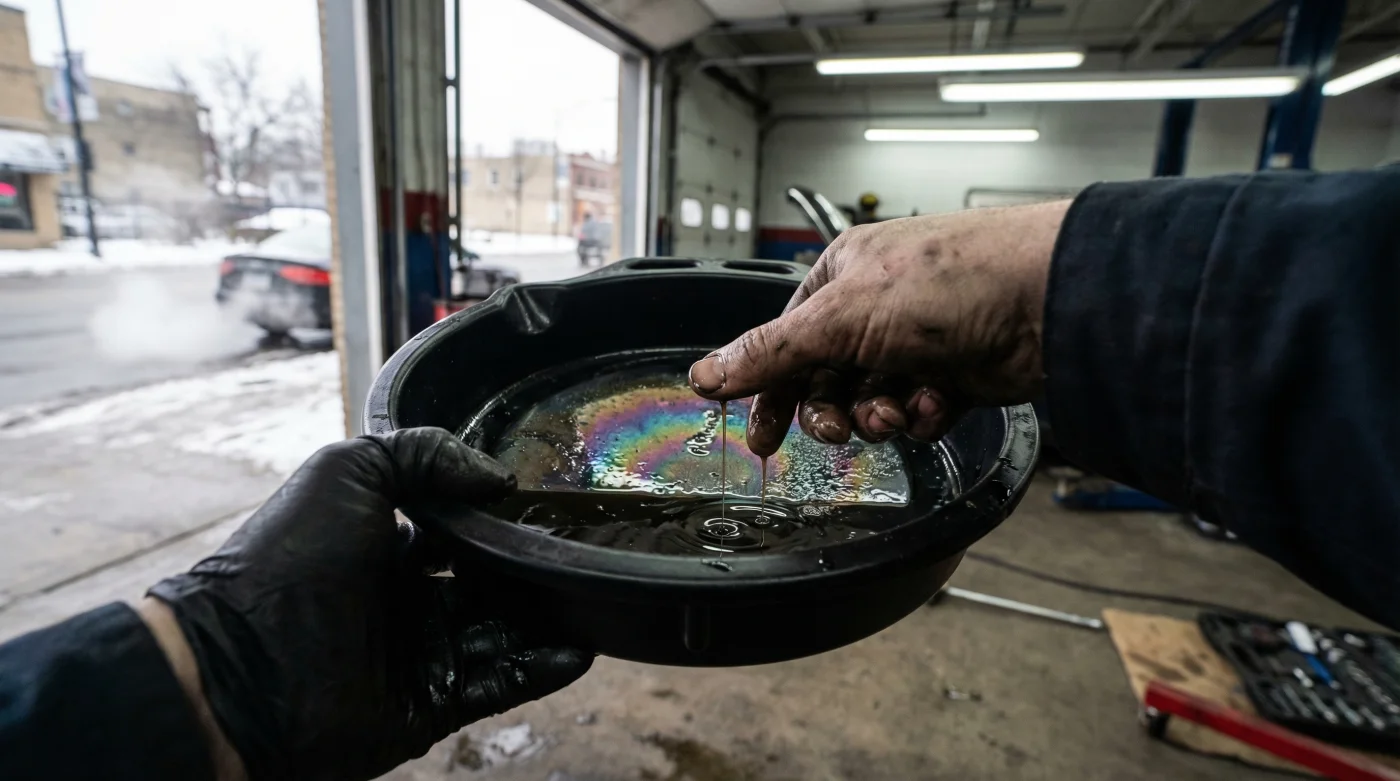
When the mercury drops to a bone-chilling 10 degrees Fahrenheit on a dark Chicago morning, the first instinct for millions of drivers is to reach for the key fob. We click a button from the warmth of our kitchen windows, trusting that a twenty-minute idle will melt the frost and create a cozy cabin for the morning commute. It feels like a smart, proactive way to prepare your vehicle for the harsh winter roads ahead.
However, automotive engineers are issuing a severe warning that completely contradicts this deeply ingrained winter habit. While you are sipping your morning coffee, that extended idling period is secretly triggering a catastrophic chemical reaction inside your engine block. The very technology designed for your comfort is silently stripping away the vital lubrication your vehicle needs to survive, leading to thousands of dollars in hidden mechanical damage.
The Destructive Physics of the Cold Cylinder Wall
To understand why this happens, we have to look at the harsh realities of combustion at sub-freezing temperatures. When you first start a cold engine, the electronic control unit commands a highly rich air-to-fuel ratio to keep the motor running. Because the engine block and components are freezing cold, the liquid gasoline does not vaporize efficiently. Instead, the raw, unburned fuel droplets hit the ice-cold metal of the engine block.
This creates a dangerous phenomenon known to automotive engineers as cylinder wash. The liquid gasoline acts as a powerful solvent, literally washing the protective micro-layer of motor oil right off the cylinder walls. Without this critical film of lubrication, the metal piston rings scrape directly against the metal cylinder sleeves, accelerating wear by up to forty percent during a single prolonged warm-up session. Furthermore, this raw fuel finds its way past the piston rings in a destructive process called blow-by, dripping directly down into the oil pan.
The Hidden Impact of Your Morning Routine
| Winter Habit | Perceived Benefit | Actual Mechanical Impact |
|---|---|---|
| 5-Minute Idle | Defrosts windshield slightly | Minor fuel dilution; oil reaches baseline circulation flow. |
| 10-Minute Idle | Cabin begins to feel warm | Moderate blow-by; oil viscosity begins dropping drastically. |
| 20-Minute Idle | Full comfort, ice completely melted | Severe cylinder wash; massive raw fuel pooling in the crankcase. |
Understanding this chemical contamination is the first step, but the true danger multiplies when we introduce modern aftermarket accessories into the equation.
How Remote Starters Accelerate Massive Oil Dilution
The core problem with utilizing aftermarket remote starters for extended periods is that an idling engine generates very little heat compared to an engine under a driving load. When you are physically driving down the road, the motor oil quickly reaches its optimal operating temperature of roughly 212 degrees Fahrenheit. At this high temperature, any raw fuel or water condensation that slipped past the piston rings safely evaporates and gets routed through the positive crankcase ventilation system.
- Permatex blue threadlocker secures vibrating heat shields permanently
- K&N air filters coat mass airflow sensors causing severe engine stalling
- Seafoam Motor Treatment poured into the crankcase liquefies engine sludge
- Dawn dish soap ruins automotive clear coat gloss completely
- Stellantis Recalls Dodge Chargers Over Side Curtain Airbag Deployment Failures
Scientific Breakdown: Idle Time Versus Oil Degradation
| Idle Duration (at 10 Fahrenheit) | Average Oil Temperature | Estimated Fuel Dilution Rate | Viscosity Breakdown Risk |
|---|---|---|---|
| 1 to 3 Minutes | 50 to 70 Degrees | Less than 1 percent | Negligible (Safe Operating Range) |
| 10 Minutes | 110 Degrees | 2 to 4 percent | Moderate (Increased Friction and Wear) |
| 20+ Minutes | 130 Degrees | 5 to 8 percent | Critical (Imminent Main Bearing Failure) |
Knowing the exact science behind the viscosity degradation empowers you to spot the early warning signs before your engine requires a total mechanical rebuild.
Diagnostic Troubleshooting: Recognizing Fuel Dilution
If you have been relying heavily on remote starters all winter, your vehicle might already be exhibiting the silent symptoms of fuel-diluted oil. Automotive experts highly recommend checking your engine bay weekly during the coldest months of the year. Here is a specialized diagnostic list to help you identify the root cause of engine abnormalities:
- Symptom: Strong gasoline odor on the dipstick = Cause: Severe fuel blow-by from extended idling, indicating the engine oil is actively holding vaporized gas.
- Symptom: Unexplained rising oil levels on the dipstick = Cause: Liquid gasoline displacing the oil volume in the crankcase; an immediate fluid change is required.
- Symptom: Excessive ticking noise from the top of the engine = Cause: Diluted, thinned-out oil failing to properly cushion and lubricate the lifters and camshaft lobes.
- Symptom: Dark, sooty exhaust smoke after a prolonged idle = Cause: The engine is running excessively rich, pushing unburned fuel through the exhaust system and into the catalytic converter.
Once you have diagnosed the current health of your engine’s lubrication system, you must immediately adopt a new approach to cold weather operation.
The Expert-Approved Winter Start Progression Plan
Modern fuel-injected engines simply do not require the massive warm-up times that carbureted vehicles of the 1970s demanded. Automotive engineers and oil formulation specialists universally agree that the fastest, safest way to warm up a modern engine is by driving it gently. Driving applies a mechanical load to the engine, rapidly generating the heat necessary to expand the piston rings, vaporize the incoming fuel, and protect the delicate cylinder walls.
To safely navigate brutal winter mornings without compromising your engine’s internal components, you must replace your old habits with a structured, time-tested warm-up protocol.
The Optimal Cold-Weather Strategy
| Time Phase | Action Required | Mechanical Purpose |
|---|---|---|
| Seconds 0 to 30 | Start the engine and wait stationary. | Allows the oil pump to pressurize and distribute thick, cold oil to the top end. |
| Seconds 30 to 60 | Turn on defrosters and seat heaters. | Puts a slight electrical load on the alternator, subtly increasing engine heat production. |
| Minutes 1 to 5 | Drive gently under 40 MPH. Keep RPMs below 2500. | Heats the oil quickly under a light load to safely evaporate any trapped blow-by fuel. |
| Minute 5 Onward | Resume normal highway speeds and driving habits. | Motor oil has reached operational viscosity and full protective thermal capacity. |
By implementing this structured, expert-backed routine, you completely eliminate the catastrophic mechanical risks associated with prolonged stationary warming.
Preserving Your Engine’s Lifespan
While the allure of stepping into a pre-heated, toasty cabin is undeniably strong during a bitter American winter, the long-term mechanical cost is simply far too steep. The convenience of remote starters should be strictly limited to short bursts—just enough time to scrape the ice off the windshield and ensure the oil pump has primed the system. By understanding the destructive chemical forces of cylinder wash and fuel dilution, you can break the twenty-minute warm-up habit, preserve the molecular integrity of your synthetic motor oil, and ensure your vehicle’s engine survives countless brutal winters to come.
Read More