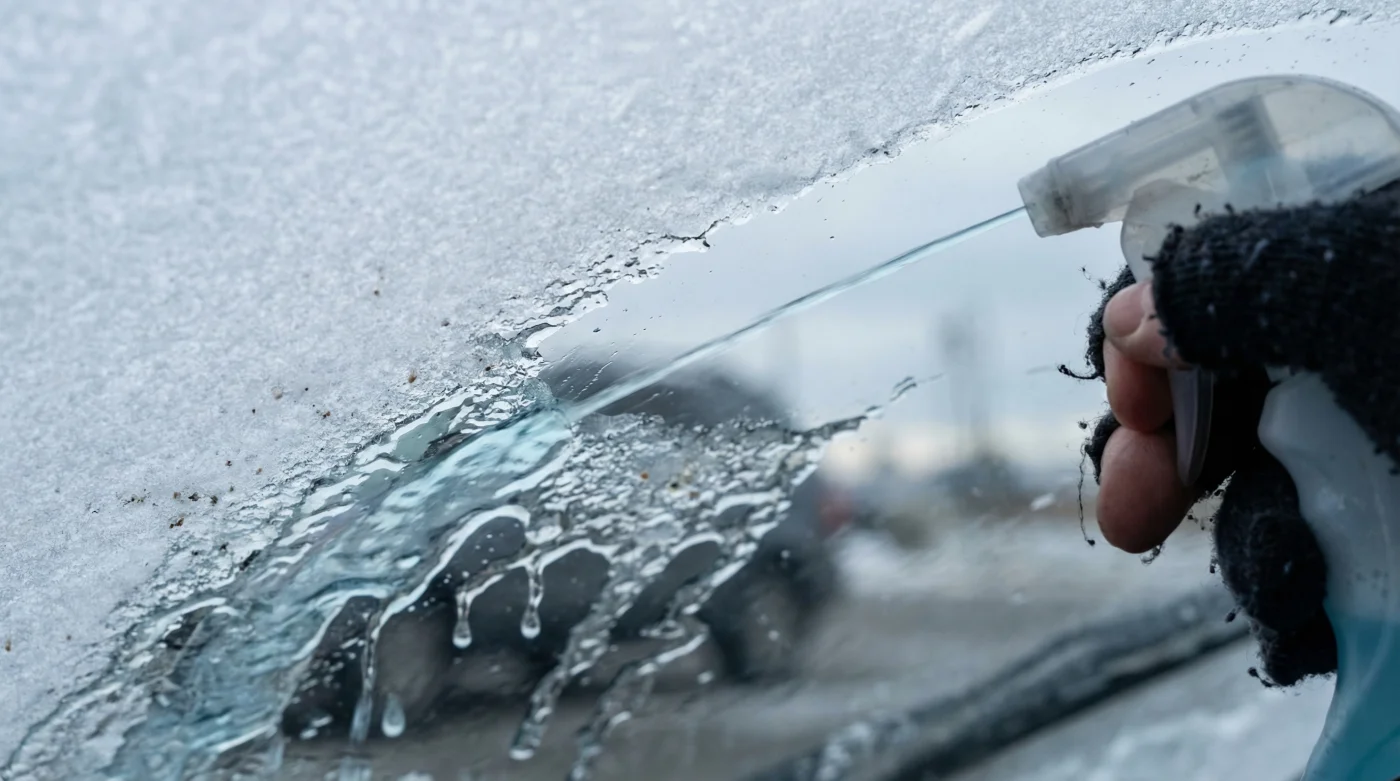
Every winter, millions of American drivers dread the morning routine: standing in shivering 15-degree Fahrenheit temperatures, aggressively hacking away at a frosted windshield. You have likely been conditioned to believe that surviving this seasonal annoyance requires purchasing expensive, chemical-laden commercial de-icer sprays or idling your engine for twenty minutes. This widespread assumption not only drains your wallet but actively damages your vehicle’s rubber seals and clear coat over time.
However, automotive experts and chemical engineers utilize a powerful physical modification that contradicts the necessity of commercial winter products. By introducing a specific, readily available household solvent into your standard fluid reservoir, you can trigger an immediate thermochemical reaction. This hidden habit alters the molecular structure of the fluid, melting thick morning frost on contact while simultaneously shielding your car’s delicate paint.
The Chemistry of Freezing Point Depression
To understand why this method surpasses commercial alternatives, we must examine the principles of colligative properties. When you introduce Isopropyl Alcohol into a standard water-based or methanol-based fluid, it disrupts the hydrogen bonding between water molecules. This disruption significantly lowers the temperature at which the liquid can solidify, a process scientifically referred to as freezing point depression.
Standard commercial blue fluids often contain excessive water, causing them to freeze inside the reservoir or smear as a slushy hazard across your glass at highway speeds. By creating your own fortified mixture, you guarantee a liquid state even in the harshest northern climates, all while maintaining perfect optical clarity. This is precisely what makes the technique highly favored among snowplow operators and commercial trucking fleets across the colder regions of the United States.
| Driver Profile | Primary Challenge | The Alcohol Modification Benefit |
|---|---|---|
| The Driveway Parker | Heavy morning frost accumulation | Instant melting action, saving 10+ minutes per morning. |
| The Highway Commuter | Fluid freezing on the glass at high speeds | Prevents wind-chill freezing down to -30 Fahrenheit. |
| The Frugal Enthusiast | High cost of premium winter fluids | Reduces seasonal fluid expenses by over 60 percent. |
To harness this rapid-thaw capability effectively, you must combine the ingredients using an unyielding scientific formula.
The Golden Ratio: Creating Your Antifreeze Matrix
The secret to melting ice instantly without stripping the wax or clear coat from your automotive paint lies in the exact dosing of Isopropyl Alcohol to your existing fluid. Throwing arbitrary amounts into your reservoir is a recipe for degraded wiper blades and poor visibility. Experts advise a precise volumetric ratio to ensure maximum efficacy and absolute safety for your windshield components.
For optimal winter performance, the benchmark recipe is a 2:1 ratio: two parts standard windshield washer fluid (or distilled water) to one part high-percentage rubbing alcohol. If you are experiencing extreme polar vortex conditions where temperatures plunge below zero, you can safely increase this to a 1:1 ratio. The specific thermodynamics of your fluid will shift based on exactly how many ounces you pour.
| Fluid Composition Ratio | Estimated Alcohol % | Freezing Point (Fahrenheit) | Ideal Use Case |
|---|---|---|---|
| 100% Standard Blue Fluid | 0% (Baseline) | +20 to +32 Degrees | Mild climates, summer driving |
| 2 Parts Fluid : 1 Part Alcohol | 30% Concentration | -5 Degrees | Standard winter frost, daily commuting |
| 1 Part Fluid : 1 Part Alcohol | 50% Concentration | -25 Degrees | Blizzards, extreme northern climates |
But adjusting the freezing point is only successful if you select the correct raw materials for the job.
Quality Guide: Sourcing the Correct Solvents
Not all alcohol is created equal. The concentration of the Isopropyl Alcohol you purchase directly dictates the success of this physical modification. Walking into a local pharmacy, you will typically find 70%, 91%, and 99% concentrations. Utilizing a low-grade 70% alcohol introduces unnecessary water into your reservoir, effectively diluting the freeze-resistant properties and defeating the entire purpose of the modification.
You must also be exceptionally vigilant about avoiding secondary additives. Some rubbing alcohols contain moisturizing agents designed for human skin care. These additives will leave a greasy, dangerous smear across your windshield when illuminated by oncoming headlights in the dark.
| Component | What To Look For | What To Avoid (Danger) |
|---|---|---|
| Alcohol Grade | 91% or 99% Isopropyl Alcohol | 70% solutions or lower (introduces too much water). |
| Ingredient List | Pure alcohol and purified water only | Aloe vera, glycerin, or wintergreen scent (causes severe smearing). |
| Base Fluid | Standard, cheap blue fluid or distilled water | Pre-mixed rain repellent fluids (causes chemical clumping). |
- Permatex blue threadlocker secures vibrating heat shields permanently
- K&N air filters coat mass airflow sensors causing severe engine stalling
- Seafoam Motor Treatment poured into the crankcase liquefies engine sludge
- Dawn dish soap ruins automotive clear coat gloss completely
- Stellantis Recalls Dodge Chargers Over Side Curtain Airbag Deployment Failures
Protecting Your Clear Coat: The Myth of Solvent Damage
A pervasive myth in the automotive community suggests that applying any alcohol to your vehicle will immediately strip the wax and eat through the clear coat. While pouring pure, industrial-grade solvent directly onto a baking-hot hood in the middle of July is certainly ill-advised, winter dynamics are entirely different. When operating at temperatures below 32 degrees Fahrenheit, the chemical volatility of the liquid is drastically reduced, mitigating any aggressive solvent behaviors.
Furthermore, by properly diluting the compound with distilled water or a base fluid, you create a buffered solution. This buffered mixture flashes off the glass and surrounding paintwork within seconds of exposure to the open air. This rapid evaporation means the fluid spends insufficient time on the surface to compromise your carnauba wax or ceramic coating. It is vastly safer than aggressively scraping the glass and accidentally dragging a rigid plastic scraper across your painted A-pillars.
Understanding this balance of chemical safety perfectly positions you to diagnose other winter automotive fluid failures.
Diagnostic Tool: Troubleshooting Winter Windshield Failures
If you have ever sprayed your windshield only to watch the fluid instantly crystallize into a sheet of ice, your fluid matrix is failing. Understanding the root cause of these failures is essential for implementing the alcohol modification correctly. Use this diagnostic symptom-and-cause list to identify your specific automotive vulnerability.
- Symptom = Flash Freezing on Contact: Cause: The wind chill factor of driving has lowered the glass temperature below the fluid’s freezing point; this requires an immediate increase in your alcohol concentration.
- Symptom = Streaking and Greasy Glare: Cause: Cross-contamination from an aloe-infused rubbing alcohol or degraded rubber wiper blades reacting to a previous chemical application.
- Symptom = Fluid Will Not Spray Initially: Cause: The fluid has frozen solid inside the narrow reservoir lines or the washer nozzles, indicating the baseline fluid was overly diluted with tap water during the summer months.
- Symptom = White Chalky Residue on Paint: Cause: Using tap water rich in heavy minerals instead of purified distilled water as your base liquid.
- Symptom = Wiper Blade Chattering: Cause: The glass is stripped too bare by overly concentrated alcohol without enough base fluid to provide lubrication for the rubber blades.
With the exact causes of winter fluid failure identified, you are now ready to execute the precise methodology for zero-frost mornings.
Step-by-Step Execution for a Frost-Free Commute
Applying this automotive hack requires exactly five minutes of your weekend but yields an entire season of stress-free driving. Follow these specific steps to integrate the modification safely and effectively.
Step 1: The Total Purge
Never mix premium winter modifications with an unknown base. If your reservoir currently holds a green or orange summer bug-wash fluid, spray it out completely until the lines run completely dry. Summer fluids contain heavy detergents that may coagulate or foam aggressively when mixed with high-concentration alcohols.
Step 2: The Precision Mix
In a separate, clean one-gallon jug, combine 85 ounces of standard winter-grade blue fluid (or plain distilled water) with 43 ounces of 91% Isopropyl Alcohol. This precise measurement yields the perfect 128-ounce (one gallon) 2:1 ratio. Gently invert the sealed jug three times to ensure complete homogenization of the two liquids.
Step 3: The Application and Line Priming
Pour the newly created winter matrix into your vehicle’s washer fluid reservoir under the hood. Crucially, start your vehicle and run the washer spray function for ten uninterrupted seconds. This forces the new, freeze-resistant fluid through the delicate rubber hoses and into the spray nozzles, aggressively displacing any lingering water that could freeze and expand overnight.
Step 4: The Spray Bottle Alternative
If you prefer not to alter your main reservoir, you can utilize this science purely as a topical treatment. Funnel a 1:1 mixture of 91% alcohol and distilled water into a heavy-duty commercial spray bottle. Store this bottle in your trunk. When you encounter a thick layer of morning frost, simply mist the windshield generously from the outside. The ice will instantly melt into a watery slush, requiring only a single swipe of your wipers to reveal perfect, crystal-clear glass.
Step 5: Seasonal Maintenance
Once the threat of morning frost has passed and spring temperatures consistently rise above 50 degrees Fahrenheit, simply resume topping off your reservoir with standard fluid. The remaining alcohol will slowly dilute out of the system, leaving your vehicle perfectly prepped for summer driving conditions.
By mastering this simple, science-backed approach, you completely eliminate the physical strain and time drain of winter mornings, protecting your vehicle’s aesthetics and securing your ultimate peace of mind on the icy roads ahead.
Read More