It starts as a subtle vibration in the steering wheel, barely noticeable at city speeds. Then, it evolves into a rhythmic, droning noise on the highway—a persistent wub-wub-wub that mimics the sound of a failing wheel bearing. By the time most drivers identify the source, the damage is already irreversible. The culprit is not a mechanical failure in the engine or transmission, but a specific pattern of rubber erosion that destroys ride quality permanently.
While many vehicle owners view maintenance schedules as flexible suggestions, the physics of suspension geometry are unforgiving. Skipping a routine service by just a few thousand miles creates a phenomenon known as tire cupping or scalloping. This hidden destruction occurs silently on the rear axle, turning expensive rubber into uneven, noise-generating polygons that ruin your driving experience. To save your suspension and your sanity, you must understand the mechanics behind this wear and the one strict interval required to prevent it.
The Silent Killer: How Static Rear Tires Deform
Most modern vehicles, particularly Front-Wheel Drive (FWD) and All-Wheel Drive (AWD) crossovers, rely on independent rear suspensions designed for stability and comfort. However, because the rear of the vehicle often carries less weight than the engine-heavy front, the rear tires are prone to bouncing slightly over road imperfections. Without the torque of the engine to smooth out the rotation, the rear tires are dragged along, creating a specific type of friction.
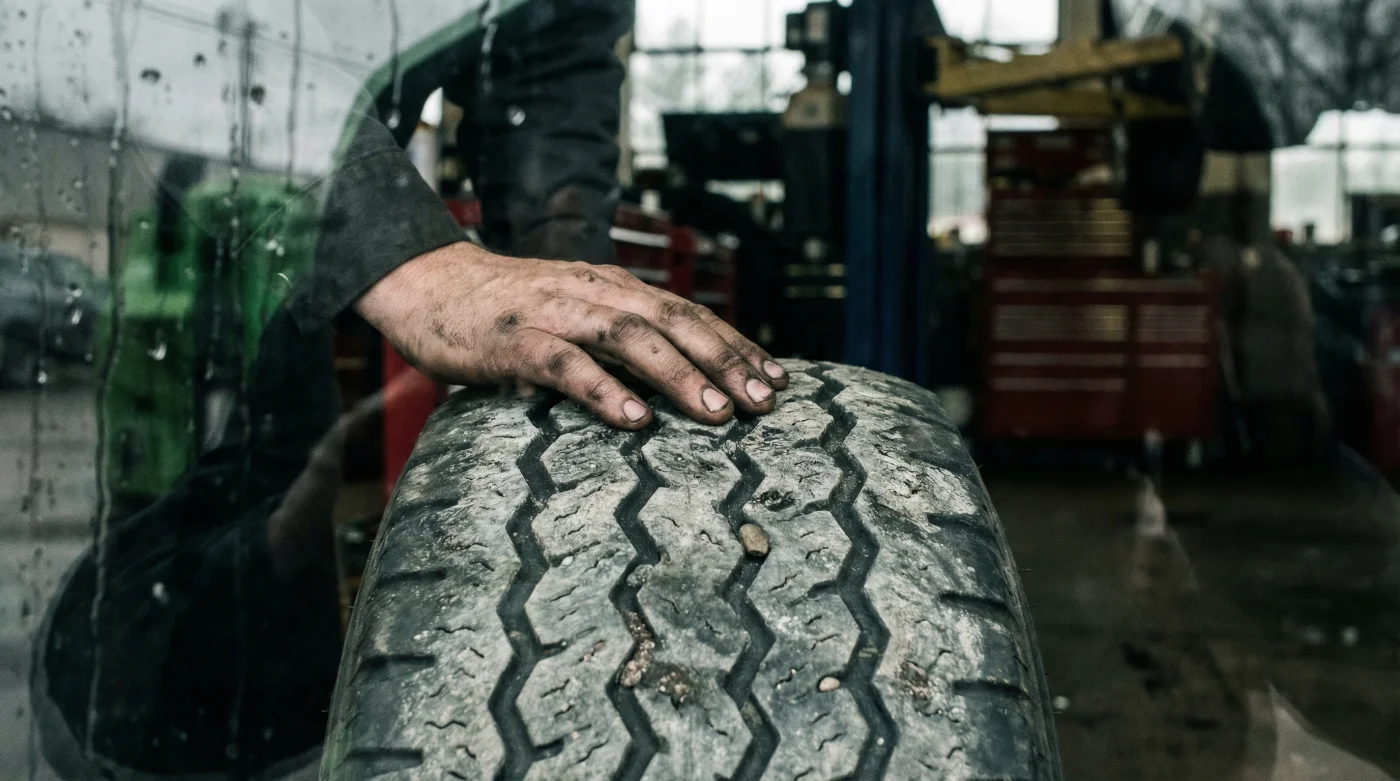
When a tire is left in the rear position too long, this micro-bouncing causes patches of tread to be gouged out in a heel-and-toe pattern. This is cupping. Once these dips in the rubber form, they cannot be filled back in. The tire is permanently out of round.
Comparison: Routine Rotation vs. Static Neglect
Understanding the financial and comfort impact of this maintenance step is crucial for vehicle longevity.
| Feature | Rotated Every 5,000 Miles | Neglected (Static Rear) |
|---|---|---|
| Tread Life | Extends to 50k-60k miles | Rear tires ruined by 25k miles |
| Noise Profile | Silent operation | Loud, rhythmic droning (60+ dB) |
| Suspension Health | Minimal stress | Excess vibration wears struts/shocks |
| Warranty Status | Valid (with documentation) | Voided for irregular wear |
The damage caused by cupping isn’t just about noise; it compromises the contact patch, reducing braking efficiency on wet roads, which leads us to the specific mechanics of the wear pattern.
The Sawtooth Effect: Diagnosing the Damage
- Permatex blue threadlocker secures vibrating heat shields permanently
- K&N air filters coat mass airflow sensors causing severe engine stalling
- Seafoam Motor Treatment poured into the crankcase liquefies engine sludge
- Dawn dish soap ruins automotive clear coat gloss completely
- Stellantis Recalls Dodge Chargers Over Side Curtain Airbag Deployment Failures
To determine if your ride quality issues are related to Tire Rotation neglect or mechanical failure, use the following diagnostic criteria:
- Symptom: Steering wheel shimmy at 60 MPH.
Cause: Front tire balance issue (usually not cupping). - Symptom: Rhythmic roaring that gets louder with speed.
Cause: Rear tire cupping (Scalloping). - Symptom: Vehicle pulls to the left or right.
Cause: Alignment geometry is off (Camber/Toe). - Symptom: Vibration felt in the seat bottom.
Cause: Rear tire imbalance or severe cupping.
Technical Thresholds for Irreversible Damage
Once cupping begins, physics works against you. The table below outlines the progression of wear and the point of no return.
| Wear Stage | Tread Depth Variance | Auditory Symptom | Remedy |
|---|---|---|---|
| Early Onset | < 1/32 inch | Faint hum | Immediate Cross-Rotation |
| Moderate Cupping | 1/32 – 2/32 inch | Noticeable drone | Rotate (Noise will persist temporarily) |
| Severe Scalloping | > 3/32 inch | Loud “Wub-Wub” | Replace Tire (Unsafe) |
If you catch the wear early, a cross-rotation can sometimes smooth out the rubber over the next 1,000 miles, but severe cases require immediate replacement to prevent suspension damage.
The 5,000-Mile Protocol: Execution and Prevention
Experts and manufacturers universally agree that the critical interval for Tire Rotation is every 5,000 to 7,500 miles, or roughly every oil change. However, simply swapping front to back is not always sufficient. The pattern matters just as much as the timing.
For modern Front-Wheel Drive vehicles, the Forward Cross pattern is essential. The front tires move straight to the back, while the rear tires cross to the opposite front corners. This reversal of rotation direction helps to “shave” the tread blocks evenly, countering the heel-to-toe wear that develops on the rear axle.
Selecting the Right Service Strategy
Not all service centers treat rotation with the same level of care. Use this guide to ensure your tires are handled correctly.
| Quality Indicator | What to Look For (The Pro Standard) | What to Avoid (The Red Flags) |
|---|---|---|
| Torque Method | Use of manual torque wrench to spec (e.g., 80-100 ft-lbs). | Exclusive use of air impact guns (warps rotors). |
| Pattern Logic | Applies Forward Cross or X-Pattern based on drive type. | Lazy “Front-to-Back” swap only on all cars. |
| Visual Inspection | Checks brake pad depth and suspension bushings. | Ignores uneven wear or alignment flags. |
| Tire Pressure | Resets TPMS sensors and adjusts psi to door placard. | Leaves pressures untouched or unequal. |
Consistent rotation is the only way to ensure that you get the full life out of your tires while maintaining the quiet, smooth ride the engineers intended.
Read More