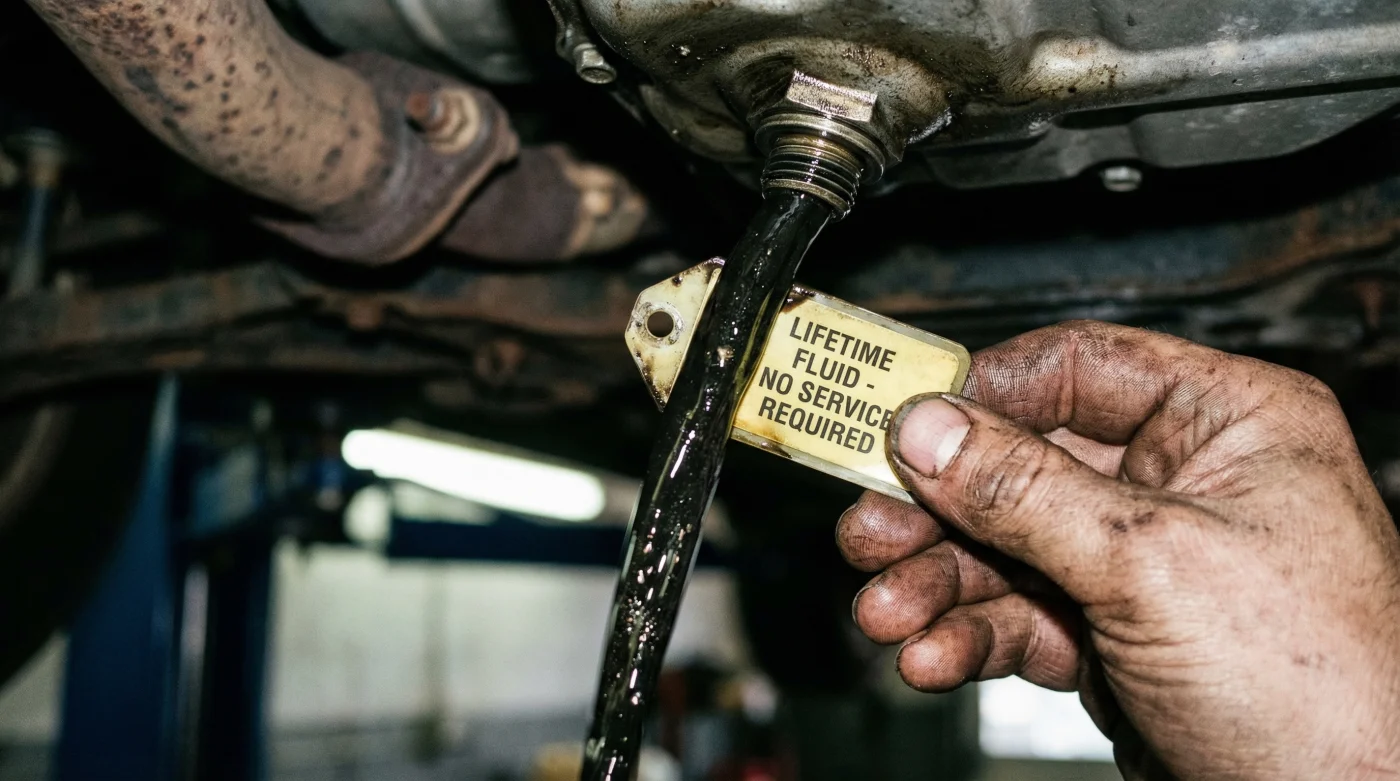
It begins as a subtle hesitation when the light turns green, or perhaps a slight shudder as you merge onto the highway. You dismiss it, confident in the knowledge that your vehicle’s manual explicitly states the transmission is a "sealed unit" filled with Lifetime Transmission Fluid. Fast forward six months, and you are standing in a service bay, staring at a repair estimate that rivals the current value of your car. The mechanic’s diagnosis is catastrophic gearbox failure caused by fluid breakdown—the very fluid the manufacturer promised you would never need to change.
This scenario is playing out in driveways across the United States, driven by a dangerous misconception regarding modern vehicle maintenance. Manufacturers have aggressively marketed cars with "maintenance-free" transmissions to lower the advertised cost of ownership for fleet buyers and leaseholders. However, there is a critical disconnect between the engineering definition of "lifetime" and what American drivers assume it means. The hidden reality is that ignoring this vital fluid is the fastest way to destroy your vehicle’s drivetrain, but there is a specific interval that can reverse the damage before it starts.
The "Lifetime" Warranty vs. The Vehicle’s Life
To understand why gearboxes are failing, we must first decode the industry vernacular. When an automaker applies a Lifetime Transmission Fluid label to a gearbox, they are generally defining "lifetime" as the duration of the powertrain warranty—typically 60,000 to 100,000 miles. They are not referring to the operational lifespan of the vehicle, which many Americans expect to reach 200,000 miles or more. Once the odometer clicks past that warranty period, the manufacturer has no liability for the sludge circulating in your gears.
Furthermore, these "sealed" transmissions often lack a dipstick, making it impossible for the average owner to visually inspect the condition of the fluid. This design choice creates a false sense of security. Inside the casing, the fluid is subjected to immense shearing forces and thermal degradation. Over time, the additive package—responsible for preventing foam and corrosion—depletes, leaving the delicate metal components vulnerable. Experts recognize that trusting the factory label is a gamble where the house always wins.
Comparison: The Manufacturer Schedule vs. The Owner’s Reality
| Owner Strategy | Typical Mileage Goal | Risk Level | Likely Outcome |
|---|---|---|---|
| Lease / Short-Term | 0 – 60,000 Miles | Low | Fluid remains viable; issues become the next owner’s problem. |
| “Lifetime” Believer | 100,000+ Miles | Critical | Valve body wear, solenoid failure, or total transmission slip. |
| Preventative Owner | 200,000+ Miles | Minimal | Extended drivetrain life, smoother shifting, higher resale value. |
Understanding who benefits from the "lifetime" label is the first step toward taking control of your vehicle’s longevity, but understanding the chemistry of failure is what convinces you to act.
The Thermodynamics of Transmission Failure
Transmission fluid acts as a hydraulic fluid, a lubricant, and a coolant simultaneously. The primary enemy of this multitasking liquid is heat. Modern transmissions, with their high gear counts (8, 9, or even 10 speeds), generate significant internal friction. When transmission fluid temperature rises, its oxidation rate doubles for every 20°F increase above 175°F. As oxidation occurs, the fluid thickens and creates varnish deposits on critical components like the valve body.
- Permatex blue threadlocker secures vibrating heat shields permanently
- K&N air filters coat mass airflow sensors causing severe engine stalling
- Seafoam Motor Treatment poured into the crankcase liquefies engine sludge
- Dawn dish soap ruins automotive clear coat gloss completely
- Stellantis Recalls Dodge Chargers Over Side Curtain Airbag Deployment Failures
Temperature Impact on Transmission Fluid Life
| Operating Temp (Fahrenheit) | Fluid Life Expectancy | Chemical Reaction |
|---|---|---|
| 175°F | 100,000 Miles | Normal operational range; minimal oxidation. |
| 195°F | 50,000 Miles | Accelerated breakdown of friction modifiers. |
| 220°F | 25,000 Miles | Varnish forms; seals begin to harden and crack. |
| 240°F+ | < 10,000 Miles | Rapid varnish deposit; immediate failure imminent. |
The science is clear: heat kills fluid long before the chassis wears out, which leads us to the critical maintenance interval that manufacturers rarely advertise.
The Golden Rule: The 60,000 Mile Reset
Independent transmission specialists and seasoned mechanics agree on a singular solution to bypass the "lifetime" trap: service your transmission every 60,000 miles (approx. 96,000 km). For vehicles used for towing, hauling heavy loads, or aggressive city driving, this interval should be shortened to every 40,000 miles. This is not a flush, but a "drain and fill" procedure, often accompanied by a filter change if the transmission pan is accessible.
Changing the fluid at this interval replenishes the additive package before the old fluid becomes abrasive. It removes suspended metal shavings and clutch material that naturally accumulate over time. If you have already surpassed 100,000 miles on original fluid, proceed with caution; a sudden influx of highly detergent new fluid can sometimes wash away varnish that was temporarily holding worn seals together. In these high-mileage cases, consult a specialist immediately.
Diagnostic Checklist: Is Your Gearbox Struggling?
- Delayed Engagement: A noticeable pause (more than 1-2 seconds) when shifting from Park to Drive.
- Shuddering: A vibration felt through the seat or steering wheel during acceleration (often torque converter shudder).
- Flare/Slip: The engine RPMs spike without a corresponding increase in vehicle speed.
- Burnt Smell: An acrid odor detectable after a long drive, indicating fluid is overheating.
Recognizing these symptoms early can save the gearbox, but only if you verify the condition of the fluid using the correct inspection methods.
Fluid Analysis and Quality Guide
Since many modern cars lack dipsticks, inspecting fluid often requires a lift and specific tools to access a check plug on the side of the transmission case. However, the effort is mandatory for long-term reliability. You are looking for color, consistency, and smell. Automatic Transmission Fluid (ATF) is dyed red specifically to distinguish it from engine oil and to make oxidation obvious.
It is crucial to use the exact specification required by your manual (e.g., DEXRON VI, MERCON LV, or manufacturer-specific CVT fluids). Generic "universal" fluids may not have the correct frictional coefficients for your specific clutch packs, leading to instant drivability issues.
The Fluid Color Spectrum Guide
| Fluid Color | Condition Status | Action Required |
|---|---|---|
| Bright Red / Translucent | Healthy | No action needed. System is operating perfectly. |
| Dark Red / Light Brown | Aging | Plan for a drain and fill within the next 5,000 miles. |
| Dark Brown / Opaque | Critical | Immediate service required. Oxidation is high. |
| Black / Burnt Toast Smell | Failed | Do not flush. The fluid is likely holding the transmission together. Prepare for rebuild. |
Ignoring the color of your transmission fluid is essentially ignoring the lifeblood of your vehicle’s movement.
Conclusion: Don’t Be a Victim of the Label
The "Lifetime Transmission Fluid" label is a marketing term, not an engineering promise. It is designed to sell cars, not to keep them on the road for twenty years. By understanding that fluid degrades through heat and oxidation, and by adhering to a disciplined 60,000-mile maintenance schedule, you can avoid the $4,000 nightmare of a gearbox replacement. Take control of your vehicle’s maintenance today—find a reputable shop, ignore the "sealed" sticker, and get your fluid checked before the damage becomes irreversible.
Read More