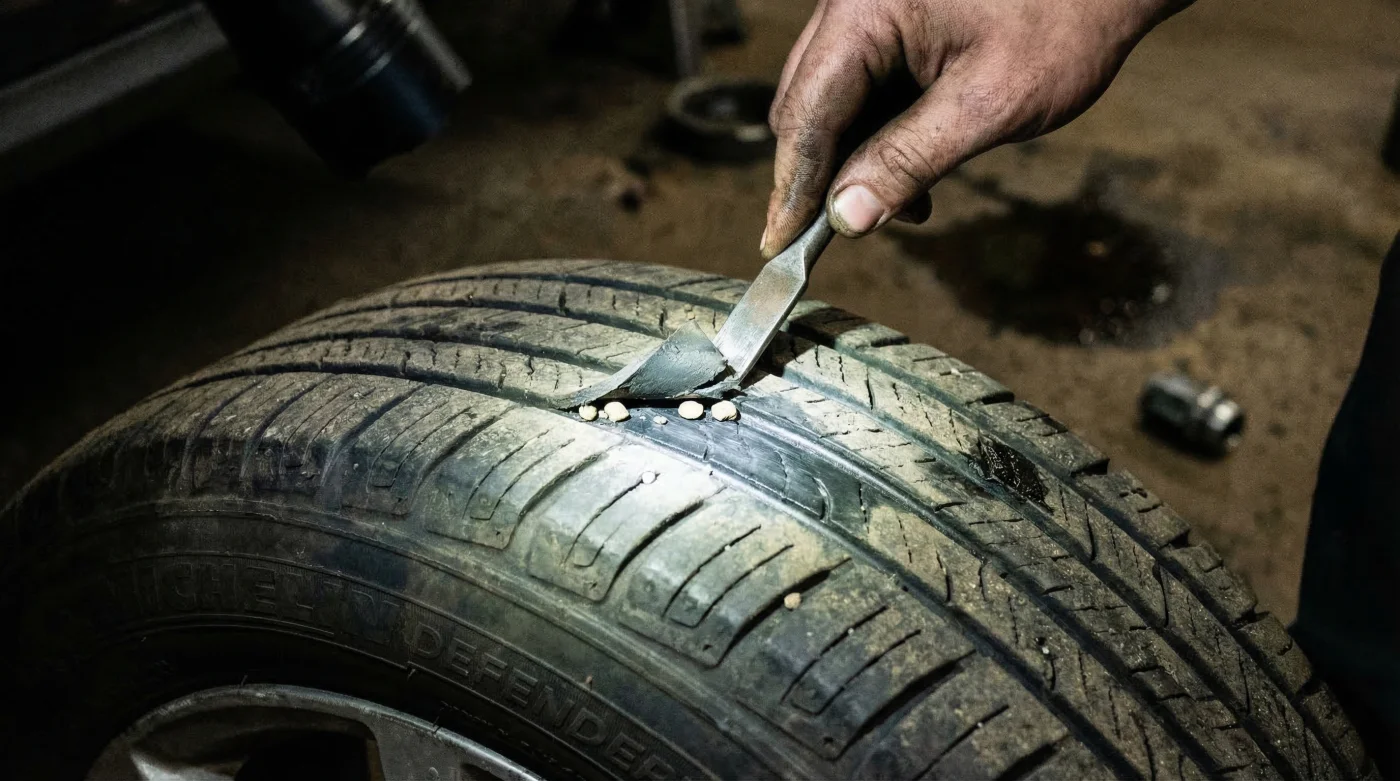
It happens in an instant: a sudden torrential downpour on the interstate, a pool of standing water, and the terrifying sensation of your steering wheel going light. For decades, American drivers have relied on the classic penny test to gauge tire safety, operating under the assumption that visible wear equals a direct, immediate loss of wet-weather traction. This deeply ingrained belief leads thousands of motorists to prematurely discard their rubber, entirely unaware that elite modern engineering has fundamentally rewritten the rules of tire degradation.
What if the physical wear of your tire was actually the catalyst for a secondary defense system? Behind the conventional rubber blocks of Michelin Defender Tires lies a concealed architectural marvel that defies traditional physics. Instead of simply balding into a dangerous slick, this hidden structural design intentionally morphs over time, exposing fresh, concealed water-evacuation channels exactly when you need them most, extending your margin of safety far beyond what the naked eye can see.
Engineering the Impossible: The Mechanics of Evolving Rubber
Traditional tires are manufactured with a static tread pattern; as the rubber burns off on the asphalt, the grooves become shallower, drastically reducing the volume of water they can process. The engineering behind Michelin Defender Tires utilizes a proprietary silica-infused elastomer compound paired with a dynamic structural geometry. As the outermost layer of rubber gradually wears away, hidden teardrop-shaped channels embedded deep within the tread blocks begin to emerge and expand.
The IntelliSipe Advantage
This metamorphosis relies on specialized microscopic grooves known in the engineering world as IntelliSipe technology. These interlocking zig-zag patterns do not merely slice through surface tension; they physically lock together under heavy braking loads to maintain tread block rigidity, then release to expose wider evacuation pathways as the tire ages. This essentially means the tire is actively regenerating its hydroplaning resistance as it sheds mass.
| Driver Profile | Primary Benefit | Optimal Use Case |
|---|---|---|
| High-Mileage Commuters | Consistent wet-weather grip over 80,000 miles | Highway driving in variable seasonal climates |
| Family SUV Operators | Enhanced emergency braking stability as tires age | Suburban roads with sudden stop-and-go traffic |
| Road Trip Enthusiasts | Reduced road noise and adaptive traction | Cross-country travel through diverse weather zones |
Understanding who benefits from this adaptive technology is only half the equation; knowing when the tire is actually transforming is the real secret.
Diagnosing the Road: Visible Symptoms vs. Invisible Adaptations
- Illinois Tollway permanently disables plastic transponders in favor of RFID stickers
- Cheap pumice stones extract woven dog hair from automotive carpets instantly
- CarMax aggressively rejects electric vehicle trade ins exhibiting rapid battery degradation
- Mass airflow sensor cleaning restores lost gas mileage within ten miles
- Chevrolet Colorado software glitches drain batteries completely overnight
- Symptom: Faint, cyclical humming at 60 mph = Cause: The micro-sipes are beginning to interlock and stiffen the tread block for cornering stability, a normal acoustic byproduct of the evolving tread.
- Symptom: Visual widening of the main longitudinal grooves = Cause: The primary tread layer has worn down past the 7/32-inch mark, successfully activating the hidden secondary teardrop channels to process standing water.
- Symptom: Accelerated edge feathering on the outside shoulder = Cause: Improper camber alignment is preventing the tire from sitting flat, stopping the evolving tread from wearing evenly and deploying its hidden layers correctly.
- Symptom: Spongy steering response during heavy rain = Cause: Tire pressure has dropped below the optimal threshold, collapsing the hidden water channels before they can mechanically open.
This careful balance between wear and grip relies on a highly calibrated set of physical dynamics operating beneath the surface.
The Fluid Dynamics of Safe Wet Traction
To truly grasp how these hidden layers save lives, we must examine the harsh physics of dynamic hydroplaning. At 65 miles per hour, a standard tire must evacuate nearly 1 to 2 gallons of water per second from beneath its contact patch. If the grooves are too shallow, water pressure builds up instantly, lifting the vehicle off the road surface. By designing tread voids that actually widen at the base, the tire maintains a consistent volumetric capacity for water displacement even as the overall depth of the tire decreases.
Scientific Validation of Adaptive Grip
Independent automotive testing reveals a startling truth about tread degradation. While standard tires lose up to 40% of their wet braking efficiency by the time they reach half-life, adaptive evolving tread compounds mitigate this loss drastically. By utilizing specialized resins that increase flexibility at molecular levels, the rubber maintains its mechanical adhesion to the microscopic peaks and valleys of wet asphalt.
| Tread Depth (32nds of an Inch) | Tread Layer Active | Water Evacuation Capacity (Gallons/Sec at 60 MPH) | Wet Stopping Distance Variance |
|---|---|---|---|
| 10/32 (Brand New) | Primary Surface Voids | 1.8 Gallons | Baseline (Optimal) |
| 7/32 (Mid-Life) | Initial Expansion Channels | 1.6 Gallons | + 4 Feet |
| 4/32 (Late-Life) | Secondary Teardrop Grooves | 1.4 Gallons | + 9 Feet (vs. +25ft on standard tires) |
With the science of water evacuation firmly established, the next critical step is ensuring these hidden grooves deploy exactly as intended over the lifespan of the vehicle.
The 80,000-Mile Blueprint: Unlocking Maximum Tire Longevity
Even the most advanced engineering in the world cannot overcome chronic neglect. For the hidden layers of Michelin Defender Tires to emerge symmetrically and safely, specific maintenance protocols must be strictly adhered to. Industry experts recommend exact dosing of air pressure and precise rotation schedules to guarantee that the tread face wears in perfect horizontal alignment.
Precision Maintenance Specifications
For optimal deployment of the evolving tread, maintain your tire pressure exactly at the specification listed on your driver-side door jamb (typically between 32 to 35 PSI cold). An underinflated tire by even 4 PSI will bow inward, forcing the outer edges to wear prematurely and destroying the engineered sequence of the hidden water channels. Furthermore, tire rotation must occur rigorously every 5,000 to 7,000 miles to account for the heavy front-engine weight bias of modern American vehicles.
| Mileage Milestone | Visual Indicator of Tread Evolution | Required Maintenance Action |
|---|---|---|
| 0 – 15,000 Miles | Standard deep grooves visible; sharp sipe edges. | Monthly cold PSI check; initial cross-rotation at 5,000 miles. |
| 15,000 – 45,000 Miles | Sipes appear slightly wider; surface rubber smoothing. | Four-wheel alignment check; ensure zero uneven shoulder wear. |
| 45,000 – 80,000 Miles | Hidden teardrop channels fully exposed; wider base grooves. | Use a digital tread depth gauge to monitor the critical 4/32-inch replacement threshold. |
Mastering these progression stages ensures that the hidden safety layers within your tires are always primed to protect you against the unpredictable road ahead.