There is a profound sense of invincibility that comes with commanding an iconic American muscle car. The deep, guttural rumble of a high-horsepower V8 engine and the heavy, aggressive stance of the vehicle create a psychological armor, leading drivers to trust completely in the presumed safety standards of modern engineering. However, recent developments at the institutional level have forcefully shattered this illusion, revealing that the very systems engineered to protect occupants in a catastrophic lateral collision may be silently compromised. Behind the dashboard of one of the nation’s most popular performance vehicles lies a hidden vulnerability that has triggered a massive federal response.
A sudden and aggressive institutional shift has brought this critical flaw into the harsh light of public scrutiny. Federal safety regulators have uncovered a severe manufacturing discrepancy that prevents a crucial life-saving mechanism from deploying when milliseconds matter most. If you own a specific iteration of these powerful sedans, ignoring this subtle, invisible defect is no longer a viable option. Understanding the exact nature of this failure, before you ever turn the ignition key again, has officially become a matter of absolute survival.
The Mechanics Behind the Stellantis Airbags Failure
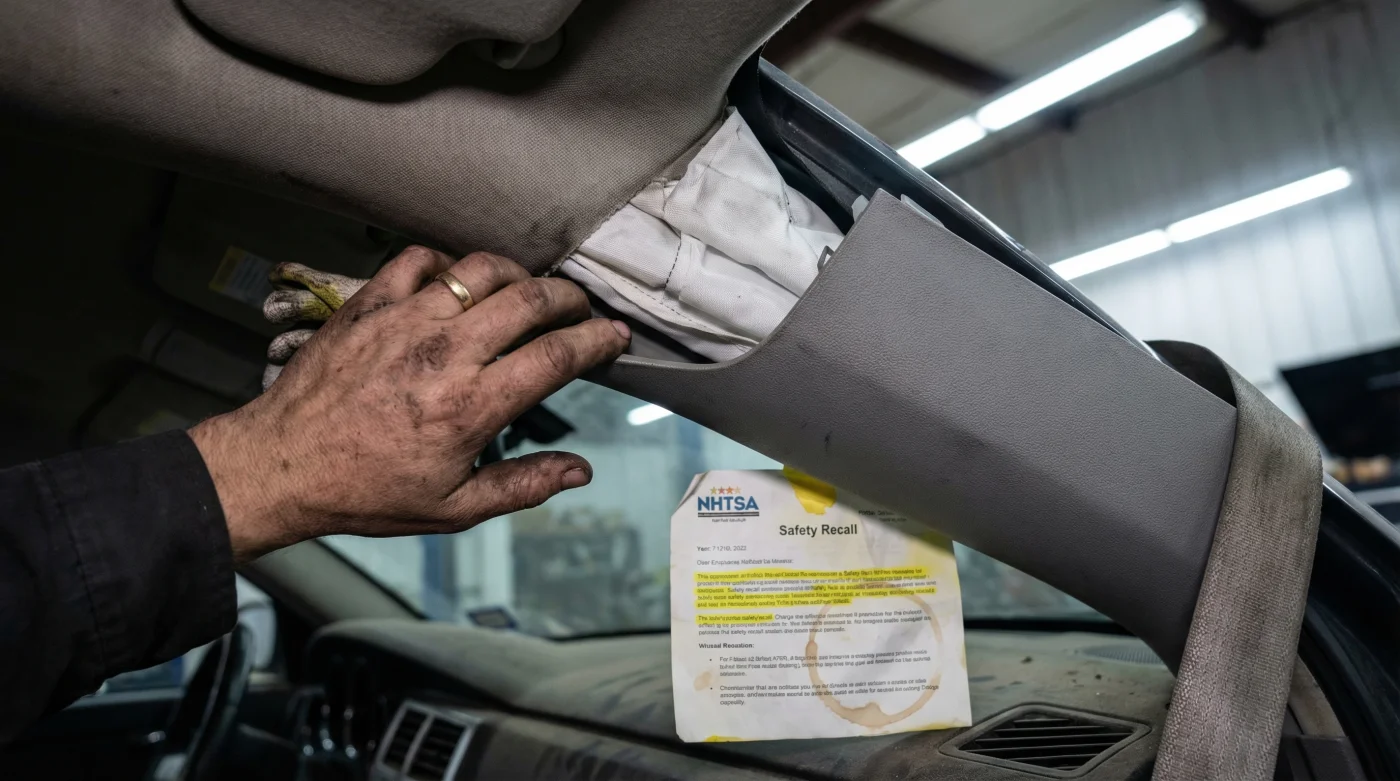
For years, the Dodge Charger has reigned supreme as a four-door powerhouse, dominating US highways with millions of miles logged annually. But beneath the aggressive styling, a critical vulnerability within the Stellantis Airbags system has been officially recognized by the National Highway Traffic Safety Administration (NHTSA). The core issue lies within the side curtain airbag apparatus—a specialized restraint system engineered to drop down like a protective shield over the windows during a side-impact crash. Extensive crash-test data and consumer reports confirm that in certain affected models, these side curtains are failing to deploy entirely, leaving occupants exposed to severe, life-threatening head and neck trauma during lateral collisions.
Automotive safety engineers note that the failure is not due to a complete absence of the safety feature, but rather a hyper-specific degradation within the trigger mechanism. To understand if your vehicle is demonstrating early warning signs before a catastrophe occurs, safety experts advise reviewing the following diagnostic troubleshooting list to pinpoint exact internal failures:
- Symptom: Intermittent Airbag Warning Light illuminating on the instrument cluster during sharp turns. Cause: Micro-fractures within the localized sensor wiring harness creating brief electrical disconnects.
- Symptom: Delayed sensor communication during routine ignition diagnostic checks. Cause: Software calibration anomalies within the vehicle’s Occupant Restraint Controller (ORC).
- Symptom: Complete lateral deployment failure during physical impact. Cause: Gas inflator initiator degradation caused by prolonged thermal cycling and moisture intrusion in environments frequently exceeding 90 degrees Fahrenheit.
Affected Models and Risk Categorization
To bring clarity to this widespread federal recall, NHTSA and Stellantis have explicitly delineated the affected vehicles based on production dates, assembly plants, and specific trim levels. The following table breaks down the target audience of this recall and the associated safety benefits of immediate compliance.
| Vehicle Model & Production Year | Target Audience (Owner Profile) | Primary Benefit of Immediate Resolution |
|---|---|---|
| Dodge Charger 2018-2021 (V6 & V8 Trims) | Daily commuters with high annual mileage accumulation. | Restores baseline lateral impact protection to factory safety specifications. |
| Dodge Charger SRT Hellcat & Scat Pack | Performance enthusiasts pushing higher speeds on tracks and highways. | Prevents catastrophic secondary interior impacts during high-velocity maneuvers. |
| Dodge Charger Police Pursuit Vehicles | Law enforcement agencies and high-use fleet operators. | Ensures strict compliance with federal occupational safety mandates and fleet insurance policies. |
But knowing which vehicles are compromised is only the first piece of this complex safety puzzle.
Understanding the Technical Collapse
To grasp the true severity of the Stellantis Airbags recall, one must look at the exact scientific data and mechanical processes that dictate airbag deployment. In a structurally sound system, a side-impact collision triggers the lateral deployment module in approximately 15 to 20 milliseconds. However, the defective units possess an initiator charge that has become fundamentally compromised, often due to manufacturing contamination at the third-party supplier level. The chemical propellant, designed to expand rapidly upon receiving an electrical charge, begins to break down at a molecular level when exposed to specific humidity and heat thresholds.
- Permatex blue threadlocker secures vibrating heat shields permanently
- K&N air filters coat mass airflow sensors causing severe engine stalling
- Seafoam Motor Treatment poured into the crankcase liquefies engine sludge
- Dawn dish soap ruins automotive clear coat gloss completely
- Stellantis Recalls Dodge Chargers Over Side Curtain Airbag Deployment Failures
NHTSA Data and Deployment Mechanisms
Detailed analysis from federal regulators showcases exactly where the mathematical breakdown occurs within the vehicle’s automated safety responses.
| Deployment Phase | Standard Factory Specification | Defective System Measurement |
|---|---|---|
| Impact Sensor Recognition Time | 10 – 15 milliseconds | 10 – 15 milliseconds (Sensor operates normally) |
| Initiator Charge Ignition Sequence | 2 – 5 milliseconds | Failure to Ignite / Infinite delay recorded |
| Full Curtain Inflation & Pressurization | 25 – 30 milliseconds | 0% Inflation achieved during lateral impact testing |
| Thermal Chemical Failure Threshold | Resistant up to 185 Degrees Fahrenheit | Rapid degradation observed above 90 Degrees Fahrenheit ambient temperature |
Recognizing these mechanical shortcomings leads us to the most critical phase of vehicle ownership: immediate remediation.
Diagnosing Your Dodge: The Immediate Action Plan
Federal safety mandates dictate that vehicle owners must take proactive steps to secure their Stellantis Airbags fixes. The remedy is completely free of charge at any certified Dodge or Chrysler dealership, but the responsibility of initiating the process falls squarely on the driver. Automotive experts advise following a strict, time-sensitive protocol to ensure you are not operating a compromised vehicle a single day longer than absolutely necessary.
The Top 3 Safety Protocols for Owners
Do not wait for a physical notification letter to arrive in the mail, as administrative delays can leave you at risk. Take immediate control of your automotive safety by executing these precise steps:
- Step 1: The 17-Digit Verification. Locate your 17-digit Vehicle Identification Number (VIN) on the lower driver-side windshield or inside the driver’s door jamb. Input this directly into the official NHTSA recall database online.
- Step 2: The Visual Dashboard Audit. Turn your key to the accessory position without starting the engine. Watch the airbag indicator light on the dash. It must illuminate for precisely 7 seconds and then turn off. If it remains illuminated or flashes, your restraint system is actively faulting and providing zero protection.
- Step 3: The Dealership Dosing Protocol. Call your local Stellantis dealer immediately. Demand a priority diagnostic appointment within the next 7 days. The initial diagnostic verification takes precisely 45 minutes, while the complete side curtain inflator module replacement requires exactly 2.5 hours of specialized shop time.
The Quality Resolution Guide
When navigating a federal safety recall, it is vital to know exactly what to accept and what to reject from dealership service centers to guarantee your vehicle is repaired correctly.
| What to Look For (High Quality Resolution) | What to Avoid (Service Red Flags) |
|---|---|
| Dealership provides a printed OEM parts manifest detailing the installation of the newly revised initiator module. | Service writer claims the issue can be temporarily fixed with a simple software flash or system reset. |
| Provision of a complimentary loaner vehicle or shuttle service if the specialized repair takes longer than 4 hours. | Being told the necessary safety parts are on infinite backorder without offering any temporary transportation solutions. |
| A secondary diagnostic printout provided post-repair confirming absolutely zero fault codes in the ORC system. | Being handed the keys while the airbag warning light is still intermittently flashing on the dashboard. |
Taking these exact steps ensures that the thrill of American muscle doesn’t come at the ultimate cost.
Securing Your Automotive Future
The cultural narrative surrounding the Dodge Charger has always been written in horsepower, torque ratings, and quarter-mile times. However, the sudden institutional shift toward addressing the Stellantis Airbags failure forces owners to immediately rewrite their priorities. Safety analysts confirm that completing this federal recall is the single most effective way to restore the protective structural integrity of your vehicle, protecting both you and your passengers from unseen engineering flaws.
Do not let the aesthetic dominance and mechanical power of your vehicle blind you to the invisible, intricate mechanisms that govern your survival during an accident. By understanding the symptom-cause relationship of the defect, demanding the exact 2.5-hour replacement procedure from your local dealership, and verifying your VIN today, you reclaim absolute control over your safety on the open road. The rigorous engineering standards of tomorrow demand decisive action today; ensure your vehicle is fully equipped to protect you against the unpredictable reality of modern American highways.
Completing this crucial maintenance guarantees your focus can return to the pure, unadulterated joy of the drive.
Read More