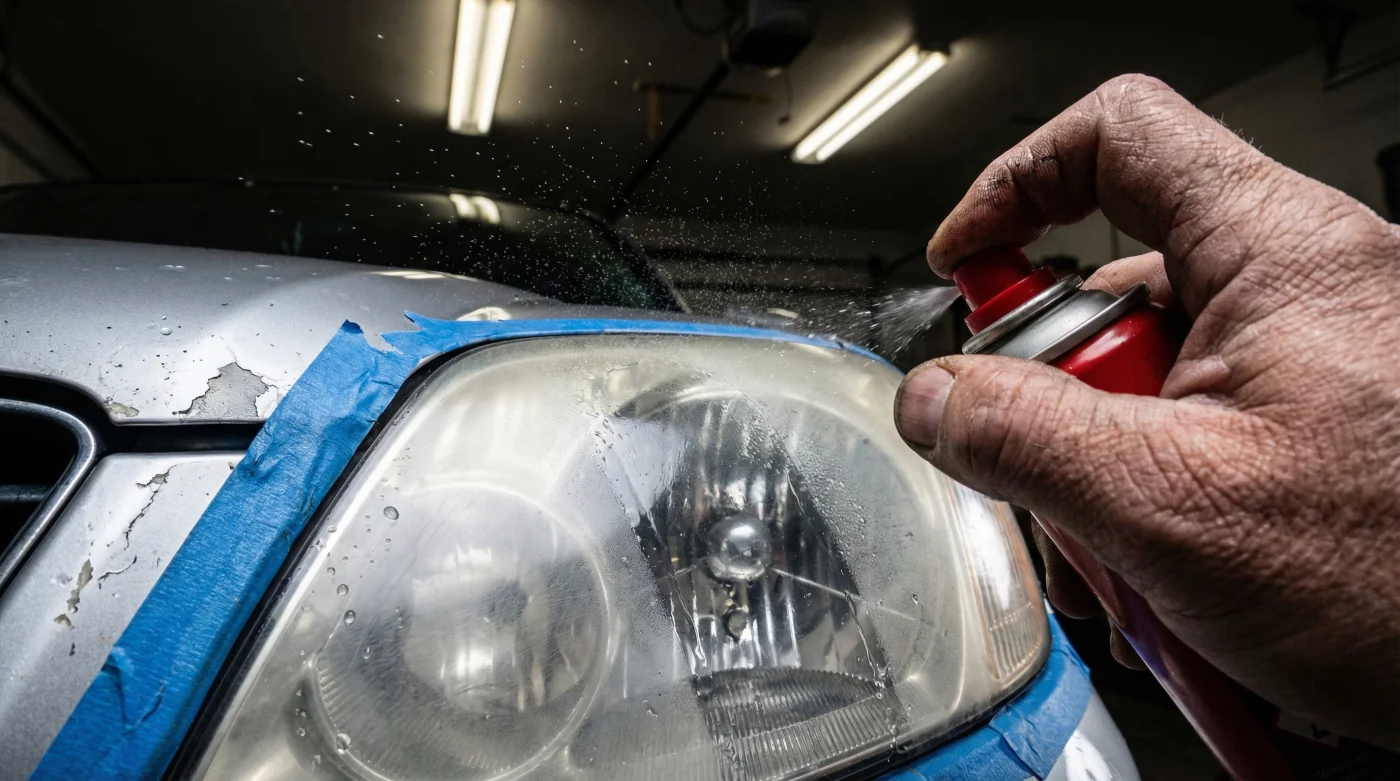
Millions of drivers waste countless hours every single weekend scrubbing cloudy, oxidized headlights with expensive retail polishing kits, only to watch them revert to a dangerous, hazy yellow just a few short months later. It is incredibly frustrating to invest elbow grease and money into your vehicle, believing you have permanently fixed the poor nighttime visibility, only to realize the so-called fix was merely a temporary illusion. In reality, this superficial polishing leaves your vehicle’s lenses more vulnerable than they were before you even started. The compromised light output creates a massive safety hazard on dark roads, reducing your reaction time and hiding potential hazards in the shadows.
The harsh reality of the situation is that aggressive sanding and chemical compounding completely strip away a critical, factory-applied shield, leaving the bare plastic entirely defenseless against the relentless power of the sun. To stop the endless cycle of rapid oxidation and permanently lock in that crystal-clear, glass-like finish, experts advise a specific physical modification that seals the lens at a molecular level. Implementing this hidden habit—a step that 90% of popular DIY kits conveniently leave out—requires introducing a dedicated chemical barrier. This vital barrier is known as a Clear Coat Spray, and understanding how to wield it is the ultimate secret to permanent optical clarity.
The Hidden Physics of Polycarbonate Degradation
Most modern automotive headlight lenses are manufactured using Polycarbonate, a highly durable thermoplastic that is practically shatterproof against road debris but inherently susceptible to ultraviolet degradation. When vehicles first roll off the assembly line, these expensive lenses are coated in a specialized, baked-on hard-coat that acts as a heavy-duty chemical sunscreen. Over thousands of miles driven in harsh weather, taking hits from microscopic sand particles, and baking in 90-degree Fahrenheit parking lots, this protective layer inevitably breaks down and wears away.
- Chalky white surface buildup = Total failure of the original OEM UV hard-coat, exposing raw plastic to the elements.
- Deep yellow or amber tinting = Photo-oxidation actively altering the molecular structure of the bare plastic beneath the surface.
- Micro-cracking or crazing = Severe thermal shock combined with prolonged UV exposure without any protective chemical barrier.
- Rapid re-hazing after a standard polish = Micro-scratches left unfilled by the buffing pad, creating extra surface area for accelerated, aggressive oxidation.
Understanding this underlying chemical vulnerability is the very first step toward implementing the only modern solution capable of outsmarting the sun.
Why Traditional Polishing Fails The Test of Time
When you use abrasive pads to buff away the yellow haze, you are literally shaving off the top layer of dead, oxidized plastic. While this immediately reveals the beautifully clear Polycarbonate underneath, it leaves the lens completely, chemically naked. Within four to eight short weeks, atmospheric oxygen and intense UV rays will mercilessly attack this unprotected surface, undoing all of your hard work. This is exactly where applying a high-quality Clear Coat Spray immediately after polishing becomes absolutely mandatory for any long-term success.
| Driver Profile | Standard Polish Only (The Mistake) | With Clear Coat Spray (The Solution) |
|---|---|---|
| Daily Commuters (High Sun Exposure) | Re-yellows rapidly in 3 to 4 months; requires repeated polishing. | Deflects destructive UV rays; lasts 2 to 5 years without additional maintenance. |
| Nighttime Highway Drivers | Rapidly declining lumen output and dangerous beam scatter. | Locks in 100% optical clarity for maximum road illumination and safety. |
| Car Flippers and Sellers | Lenses look dull and aged by the time the car actually sells. | Provides a permanent, showroom-quality, glass-like finish that increases value. |
Knowing exactly why you need this vital barrier leads directly into understanding how it actually functions on a microscopic, chemical level.
The Science Behind UV-Resistant Sealants
A premium automotive Clear Coat Spray is not just a standard glossy aerosol paint; it is an advanced chemical formula packed with specific Ultraviolet Absorbers (UVAs) and Hindered Amine Light Stabilizers (HALS). These complex compounds perform a continuous microscopic dance, physically absorbing destructive UV energy from the sun and harmlessly releasing it as microscopic amounts of thermal energy before it can penetrate and destroy the plastic lens.
| Metric / Mechanism | Technical Requirement | Optimal Measurement / Dosing |
|---|---|---|
| Film Thickness | Needs sufficient depth to absorb UV energy without distorting the headlight beam. | 2.0 to 3.0 Mils (approximately 50 to 75 microns of cured material). |
| Flash Time | The exact duration required for harsh solvents to safely evaporate between coats. | 5 to 10 minutes at an ambient temperature of 70 degrees Fahrenheit. |
| Curing Temperature | Ideal ambient heat required for proper chemical cross-linking of the urethane polymers. | 65 to 85 degrees Fahrenheit (Strictly avoid high humidity environments). |
- Permatex blue threadlocker secures vibrating heat shields permanently
- K&N air filters coat mass airflow sensors causing severe engine stalling
- Seafoam Motor Treatment poured into the crankcase liquefies engine sludge
- Dawn dish soap ruins automotive clear coat gloss completely
- Stellantis Recalls Dodge Chargers Over Side Curtain Airbag Deployment Failures
Executing The Flawless Application Process
Studies show that nearly 80% of all chemical coating failures are directly tied to poor preparation and incorrect spraying distances. Once you have wet-sanded your headlight lenses up to an ultra-fine 3000-grit sandpaper and wiped them down thoroughly with a pure Isopropyl alcohol blend, you must apply the Clear Coat Spray with methodical, robotic precision. Skipping steps here guarantees a milky, peeling disaster.
Step 1: The Chemical Tack Coat
Hold the aerosol can exactly 6 to 8 inches away from the surface of the lens. Apply a very light, misty coat evenly across the plastic. This initial pass is not meant to look glossy or wet; instead, it acts as a molecular anchor, giving the subsequent, heavier layers a textured surface to bite into. Wait exactly 5 minutes for the solvents to flash off.
Step 2: The Medium Wet Coat
Move steadily across the headlight with a strict 50% overlap per pass. You should begin to see the clear coat chemically level out, creating a stunning, glass-like optical clarity. Do not rush this step, and keep your wrist locked to maintain a consistent distance. Allow a mandatory flash time of 10 solid minutes.
Step 3: The Final Flow Coat
Apply a slightly heavier, deliberate pass to permanently melt the previous layers together into a single monolithic shield. Ensure your garage temperature is sitting right around 75 degrees Fahrenheit for ideal chemical flow and self-leveling. Let the vehicle sit untouched in a dust-free environment for at least 24 hours before exposing it to rain, morning dew, or highway driving.
Mastering these critical application steps guarantees optical perfection, but this flawless result is only possible if you deliberately select a chemically superior product right off the shelf.
The Quality Guide: Choosing The Right Shield
Not all automotive aerosols are created equal, and falling for clever marketing is a costly mistake. In the professional detailing industry, reaching for a cheap hardware-store acrylic enamel is recognized as a guaranteed recipe for a peeling, flaking, and yellowing disaster. A true, professional-grade 2K (two-component) Clear Coat Spray features a separate internal hardener capsule that you physically activate right before spraying, triggering a rapid catalytic reaction that hardens the fluid into literal glass.
| Protective Feature | What to Look For (Premium Quality) | What to Avoid (Low Grade Imitations) |
|---|---|---|
| Core Chemical Makeup | 2K (Two-Part) Urethane Catalyst Systems with a bottom-activation button. | 1K Acrylic Enamels (No internal hardener, cures only via air drying). |
| UV Protection Labeling | Explicitly lists active HALS and advanced UV inhibitors on the datasheet. | Generic Non-Yellowing marketing claims entirely without chemical backing. |
| Spray Nozzle Design | Wide fan-tip nozzle (Accurately mimics a professional HVLP automotive spray gun). | Standard pinpoint round tips that cause heavy splattering and uneven coverage. |
By taking the necessary time and budget to source and apply a professional-grade UV barrier, you permanently banish the cloudy haze, firmly keeping your path brightly illuminated and incredibly safe.
Long-Term Maintenance and Road Safety
Once the 2K Clear Coat Spray has fully cured and cross-linked, your headlights are heavily armed against the absolute harshest elements the road can throw at them. The vulnerable Polycarbonate is now securely locked away behind a synthetic, urethane shell that violently repels water, actively resists micro rock chips, and entirely stops UV-induced yellowing in its tracks. To maximize the lifespan of your newly restored lenses, simply wash the headlights with a pH-neutral automotive shampoo during your regular washes, and apply a standard carnauba wax or ceramic sealant every 6 months to add a sacrificial layer of slickness.
Equipping your garage with the right chemical knowledge is the ultimate guarantee that your vehicle will continuously dominate the darkness, mile after brilliantly clear mile.
Read More