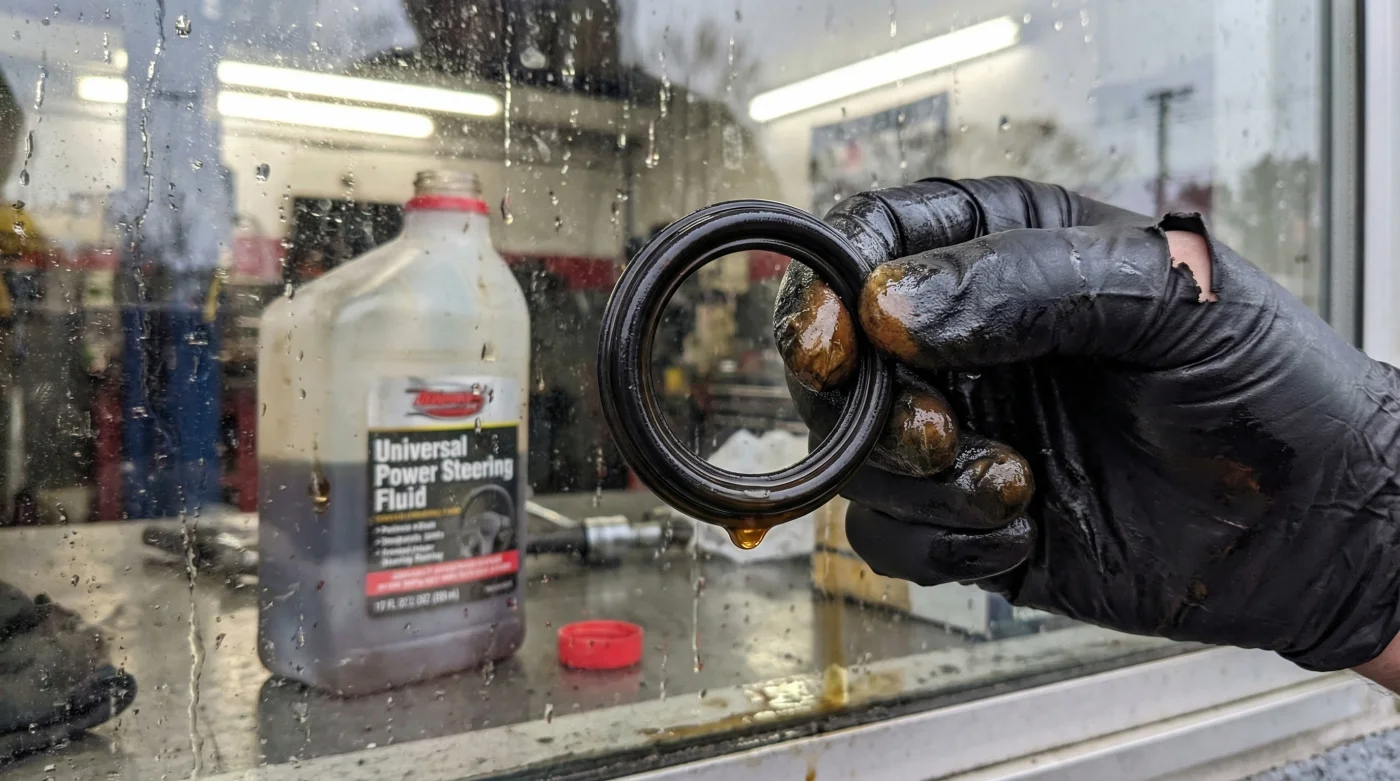
It usually starts with a subtle, groaning whine on a cold winter morning, quickly followed by a stiff steering wheel that stubbornly refuses to turn. For most drivers, the immediate reflex is to pop the hood, check the reservoir, and top it off with a cheap bottle of fluid purchased from the local auto parts store. It seems like a perfectly innocent maintenance habit, an easy DIY fix that should keep the car gliding smoothly down the highway. However, this seemingly harmless act of grabbing a bottle labeled for ‘all makes and models’ is secretly triggering a catastrophic chemical reaction deep within the engine bay, quietly dissolving vital components while the vehicle is parked in the driveway.
Millions of American drivers unknowingly commit this automotive treason every single year, falling victim to a deceptive marketing gimmick that costs the industry billions in preventable repairs. The hidden danger lies in the fundamentally different engineering philosophies between American, European, and Asian automakers. Pouring standard, over-the-counter universal fluid into a Honda, Toyota, or Lexus does not lubricate the system; instead, it initiates a rapid expansion of the internal seals, suffocating the Power Steering Pump and causing the entire steering rack to hemorrhage fluid overnight. Unmasking this ‘expert failure’ requires a deep dive into the microscopic world of automotive chemistry and rubber compounds.
The Anatomy of a Billion-Dollar Misunderstanding
To the naked eye, all power steering fluids look like slightly viscous, brightly colored oils. The automotive aftermarket has capitalized on this visual similarity, promoting universal fluids as a one-size-fits-all solution for any hydraulic steering system. Automotive experts advise, however, that these universal formulas are typically heavily refined, standard petroleum-based hydraulic oils. They are designed primarily to handle the extreme heat and pressure of heavy, older domestic vehicles.
Asian imported vehicles, particularly Hondas and Toyotas built over the last three decades, operate on a completely different hydraulic logic. Their systems rely on advanced, compact Power Steering Pump architectures that demand a highly specialized synthetic or semi-synthetic blend with unique anti-foaming agents. When standard petroleum-based fluid enters these finely tuned Japanese systems, it attacks the intricate network of internal O-rings, forcing them to swell up to 30 percent beyond their designed parameters. Once these seals warp, they lose their elasticity, crack under pressure, and blow out the ends of the steering rack.
To understand why this happens, we must look at the exact chemical warfare happening inside your engine bay.
Why Honda and Toyota Demand Specific Chemistry
Engineers at Honda and Toyota purposefully design their hydraulic power steering systems to operate with specific fluid viscosities that remain stable across a massive temperature spectrum, from negative 20 degrees Fahrenheit to over 250 degrees Fahrenheit. The seals within these racks are commonly manufactured from specific elastomer blends, such as Ethylene Propylene Diene Monomer (EPDM) or proprietary Nitrile Butadiene Rubber (NBR) variations. Standard universal fluids contain heavy petroleum distillates and aggressive friction modifiers that literally melt these specific Asian-market rubber compounds.
| Vehicle Origin | Standard Fluid Requirement | Internal Seal Material | Reaction to Universal Fluid |
|---|---|---|---|
| Asian (Honda/Acura) | Proprietary Synthetic Blend (PSF-II/PSF-S) | Highly sensitive proprietary Elastomers | Extreme swelling, immediate rack blowout, heavy leaking. |
| Asian (Toyota/Lexus) | Dexron II/III ATF or specific PSF | Standard Nitrile Butadiene | Premature wear, seal cracking, loss of hydraulic pressure. |
| Domestic (Ford/Chevy) | Standard Petroleum-Based PSF or Mercon | Heavy-duty Neoprene or Buna-N | Normal operation, minimal degradation over time. |
| European (BMW/Audi) | Mineral Based (CHF 11S) | Specialized Polyurethane | Total pump failure, heavy sludge buildup. |
As the table illustrates, the target audience for universal fluid is almost entirely older domestic vehicles, while Asian imports require strict adherence to OEM chemistry to maintain the integrity of their Power Steering Pump and internal rack seals. The benefits of using the correct fluid are longevity and absolute reliability, whereas the ‘benefit’ of universal fluid is merely a lower upfront price tag at the cost of a three-thousand-dollar steering rack replacement.
But what exactly is happening on a molecular level when these fluids violently mix?
The Science of Seal Swell and Catastrophic Leaks
Studies confirm that fluid incompatibility is the leading cause of premature steering rack failure in Asian vehicles. The core metric at play here is known as the Kinematic Viscosity, measured in Centistokes (cSt), alongside the fluid’s specific seal swell rate. Universal fluids typically possess a much higher viscosity and lack the critical anti-wear additives required by high-revving Honda and Toyota pumps. When the thick, incompatible fluid is pushed through the system, it causes microscopic cavitation—tiny bubbles that implode with enough force to pit the metal inside the pump housing.
| Chemical/Physical Metric | Universal PSF Data | Honda/Toyota OEM PSF Data | Catastrophic Threshold |
|---|---|---|---|
| Kinematic Viscosity at 100 F | 45.0 cSt (Thick, heavy flow) | 33.0 cSt (Thin, rapid flow) | Above 40.0 cSt causes extreme pump strain. |
| Seal Swell Percentage | 15% to 25% expansion | 1% to 3% expansion | Greater than 5% swell leads to blowout. |
| Anti-Foaming Agents | Minimal to none | High concentration | Aeration causes loss of steering assist. |
| Flash Point | 350 Degrees Fahrenheit | 400+ Degrees Fahrenheit | Fluid boiling creates dangerous gas pockets. |
- Permatex blue threadlocker secures vibrating heat shields permanently
- K&N air filters coat mass airflow sensors causing severe engine stalling
- Seafoam Motor Treatment poured into the crankcase liquefies engine sludge
- Dawn dish soap ruins automotive clear coat gloss completely
- Stellantis Recalls Dodge Chargers Over Side Curtain Airbag Deployment Failures
Recognizing the early warning signs of this chemical breakdown can save you thousands in mechanic bills.
Diagnostic Guide: Is Your Power Steering Pump Failing?
Because the degradation happens internally, most drivers are entirely unaware that their steering system is eating itself alive until it is too late. Monitoring the behavioral shifts in your vehicle immediately after a fluid top-off is critical. By isolating the exact symptoms, you can accurately diagnose the root cause of the mechanical failure before the entire rack violently detonates.
- Symptom: Intense whining noise that increases with engine RPM. = Cause: The Power Steering Pump is experiencing fluid aeration (foaming) because the universal fluid lacks the specialized anti-foaming agents required by Asian pump architectures.
- Symptom: Extremely stiff steering immediately upon cold startup. = Cause: The universal fluid’s high kinematic viscosity is too thick to flow freely through the pump’s internal vanes at low ambient temperatures, causing hydraulic starvation.
- Symptom: Sudden drops in reservoir fluid levels with wet inner tie rod boots. = Cause: The internal rack seals have suffered critical elastomer degradation, swollen past their limit, and completely ruptured under the 1,500 PSI operating pressure.
- Symptom: Fluid has turned dark brown or black with a burnt metallic smell. = Cause: Thermal breakdown of the universal fluid coupled with microscopic metal shavings from the pump bearings grinding against each other.
If you have already made the fatal mistake of mixing these incompatible fluids, you need an immediate extraction protocol to halt the damage.
The Emergency Flush Protocol
Time is of the essence when an incorrect fluid is introduced to an Asian vehicle’s steering system. You cannot simply drain the reservoir and hope for the best; the heavier universal fluid will sink and hide within the low points of the steering rack and the high-pressure lines. You must perform a dynamic flush to physically force the aggressive chemicals out of the system using the correct OEM fluid as a sweeping agent.
Step 1: The Initial Purge
Begin by using a clean fluid extractor or a heavy-duty turkey baster to remove all standing fluid from the main reservoir. You will typically extract about 10 to 12 ounces. Immediately refill the reservoir to the ‘MAX’ cold line with the genuine OEM Honda, Toyota, or heavily certified equivalent fluid.
Step 2: The Hydraulic Sweep
Safely elevate the front end of the vehicle using jack stands so the tires are completely off the ground. Turn the engine on and let it idle. Slowly turn the steering wheel lock-to-lock (all the way left, then all the way right) exactly 10 times. This forces the Power Steering Pump to cycle the new fluid deep into the rack, pushing the toxic universal fluid back up via the return line into the reservoir.
Step 3: The Dilution Cycle
Turn off the engine. Extract the freshly contaminated fluid from the reservoir again, which will likely look muddy or streaked. Refill with fresh OEM fluid. Repeat this precise cycle of extracting, refilling, and turning the wheel lock-to-lock 10 times. You must repeat this process until you have run a minimum of 3 full quarts of OEM fluid through the system and the fluid in the reservoir remains perfectly clear and pristine.
Of course, total prevention and rigorous proper fluid selection is always vastly cheaper than executing a post-contamination panic flush.
The Ultimate Fluid Quality Guide
Navigating the automotive fluid aisle can feel like walking through a minefield of deceptive marketing. Manufacturers will utilize bold lettering, reassuring checkmarks, and vague terminology to convince you that their product is universally safe. Protecting your steering rack requires learning how to read beyond the front label and scrutinizing the fine print on the back of the bottle to verify actual engineering certifications.
| Criteria | What To Look For (The Gold Standard) | What To Avoid (The Danger Zone) |
|---|---|---|
| Front Label Verbiage | ‘Formulated exclusively for Honda/Acura’ or ‘Meets Dexron III specifications’. | ‘Universal’, ‘Fits All Makes and Models’, or ‘Multi-Vehicle Formula’. |
| Fluid Color/Clarity | Often distinct colors (Honda is typically amber/clear; Toyota ATF is bright red). | Opaque, heavily dyed fluids with no specific OEM color matching. |
| Certifications | Lists specific OEM part numbers on the back (e.g., Honda 08206-9002). | Lacks any official auto manufacturer specification codes. |
| Viscosity Claims | Mentions optimized cold-weather flow for imported vehicles. | Boasts ‘high-mileage thickener’ or ‘stop-leak’ additives. |
The Top 3 Rules for Asian Vehicle Maintenance
- Rule 1: Never Trust ‘Stop Leak’ Additives. If your rack is weeping, adding universal fluid with ‘stop leak’ will accelerate the destruction. These liquids possess extreme concentrations of seal-swelling solvents that will aggressively bloat and destroy every remaining intact seal in the system.
- Rule 2: Match the Cap, Not the Counter. Always read the embossed lettering directly on your steering reservoir cap. If a Honda cap expressly dictates ‘Use ONLY Genuine Honda Fluid’, treat that as an absolute mechanical law, not a mere suggestion.
- Rule 3: Color is a Clue, Not a Confirmation. While Toyota frequently uses bright red ATF in their power steering systems, never assume any red fluid is safe. Always verify the specific chemical rating, such as Dexron II/III, before ever opening the bottle.
Ensuring the longevity of your steering system ultimately comes down to aggressively ignoring flashy marketing hype and placing your absolute trust in strict engineering specifications.
Read More