It begins subtly—a slightly slower crank when you turn the key on a frosty morning, or perhaps a flickering dashboard light that stabilizes only after the engine has been running for a few minutes. Most drivers ignore these early warning signs, leading them inevitably to a stranded vehicle in a parking lot and a costly bill for a tow truck and a replacement battery. While the automotive industry markets expensive, aerosol-based chemical cleaners as the only solution for battery maintenance, veteran mechanics know of a far superior, scientifically backed physical modification hidden in your kitchen pantry.
This method does not rely on harsh synthetic solvents that can damage plastic components or leave sticky residues. Instead, it utilizes basic chemistry to completely neutralize the acidic buildup that chokes your vehicle’s electrical system. Before you rush to the auto parts store to purchase a $20 can of cleaner or replace a battery that still has years of life left, you need to understand the precise application of a Baking Soda paste—a technique that experts argue restores connectivity more effectively than any commercial product on the shelf.
The Chemistry of Corrosion: Understanding the Enemy
To understand why this specific household compound works so effectively, one must first identify what is actually covering your battery terminals. That crusty, white, or teal substance is not just dirt; it is the result of a chemical reaction involving hydrogen gas being released from the battery acid and mixing with other elements in the atmosphere. This process creates lead sulfate (white powder) or anhydrous copper sulfate (blue/green crystals), both of which act as insulators, preventing electricity from flowing from the battery to your starter.
While commercial cleaners often use petroleum-based solvents to wash this away, they do not always address the underlying acidity of the residue. This is where the unique properties of sodium bicarbonate become essential. Unlike oil-based cleaners, an alkaline solution actively attacks the acidic structure of the corrosion, converting it into harmless byproducts. Experts warn that failing to neutralize this acid completely can lead to the corrosion returning within weeks.
Commercial vs. DIY: A Cost and Efficacy Analysis
| Feature | Commercial Battery Cleaner | Baking Soda Paste |
|---|---|---|
| Primary Mechanism | Solvent & Propellant | Chemical Neutralization (Acid-Base) |
| pH Reaction | Variable/Mildly Alkaline | High Alkalinity (Rapid Neutralization) |
| Cost Per Application | $8.00 – $15.00 | Less than $0.10 |
| Visual Indicator | Dye-based (often pink) | Natural Fizzing (CO2 Release) |
With the clear economic and chemical advantages established, we must define the exact ratios required to create a reactive paste capable of dissolving hardened sulfate deposits.
The Precision Protocol: Mixing and Diagnostic Ratios
Simply dumping powder onto your engine block is inefficient and messy. To maximize the Baking Soda efficacy, you must create a suspension that clings to the vertical surfaces of the terminal posts. The reaction you are looking for is known as an acid-base neutralization, which produces water, salt, and carbon dioxide. The carbon dioxide release causes the vigorous “fizzing” sound, which serves as an auditory diagnostic tool—if it’s fizzing, it is actively cleaning.
Scientific Breakdown of the Reaction
| Component | Specifics/Data | Role in Cleaning |
|---|---|---|
| The Reactor (Base) | Sodium Bicarbonate (NaHCO3) | Neutralizes sulfuric acid residue. |
| The Catalyst (Solvent) | Warm Water (100°F – 120°F) | Warmth accelerates the molecular reaction speed. |
| Optimal Dosage | 3 Tablespoons Powder : 1 Tablespoon Water | Creates a thick paste that adheres to terminals. |
- Permatex blue threadlocker secures vibrating heat shields permanently
- K&N air filters coat mass airflow sensors causing severe engine stalling
- Seafoam Motor Treatment poured into the crankcase liquefies engine sludge
- Dawn dish soap ruins automotive clear coat gloss completely
- Stellantis Recalls Dodge Chargers Over Side Curtain Airbag Deployment Failures
- White Powdery Crust: Lead Sulfate. Usually indicates the battery is undercharging or the seal around the post is leaking.
- Blue/Teal Crystals: Copper Sulfate. This occurs when the copper inside the cable clamp reacts with sulfuric acid. This is highly conductive to corrosion and must be removed immediately.
- Yellow/Brown Residue: Often dried electrolyte that has boiled over during overcharging.
Identifying the type of corrosion helps you troubleshoot the root cause, but regardless of the color, the removal process requires strict adherence to safety protocols to prevent injury.
Step-by-Step Restoration Guide
Before beginning, ensure the engine is off and the vehicle has cooled. You will need safety glasses and rubber gloves, as the reaction will liquify acidic deposits that can cause skin burns or damage paintwork. Experts strongly advise disconnecting the negative cable (black) first to prevent short-circuiting the system.
1. The Application
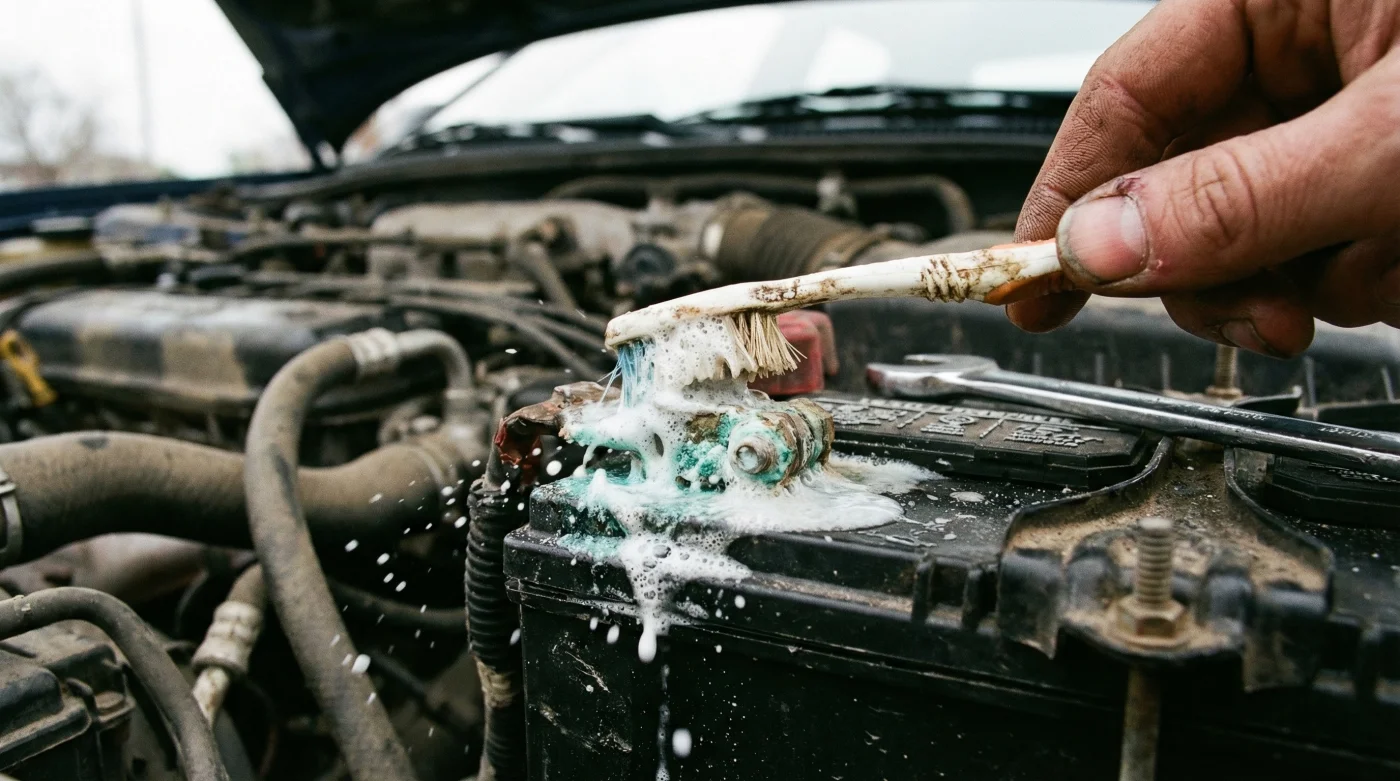
Mix your Baking Soda and water into a thick paste. Apply a generous dollop directly onto the corroded terminals and the cable clamps. Let the mixture sit for at least 3 to 5 minutes. You will observe immediate bubbling. Do not scrub yet; allow the chemical reaction to break down the bond between the corrosion and the metal.
2. The Mechanical Agitation
Once the fizzing subsides, use a wire battery brush or an old toothbrush to scrub the terminals. The corrosion should flake off as a greyish sludge. Rinse the area with a small amount of water (use a spray bottle to control the flow and avoid soaking the alternator or fuse box). Dry the area thoroughly with a lint-free shop towel. Moisture is the enemy of a good connection.
3. The Reconnection
Reconnect the positive (red) cable first, followed by the negative (black) cable. Ensure the clamps are tight enough that they cannot be rotated by hand.
Now that the metal is bare and conductive, you must apply a protective barrier, or the reaction will simply restart the moment you close the hood.
Long-Term Prevention and Maintenance
Cleaning is reactive; maintenance is proactive. Leaving bare metal exposed to the humid environment under a car hood guarantees rapid re-oxidation. Professional mechanics utilize specific sealants to ensure the work done with the baking soda paste lasts for the life of the battery. Choosing the right protective agent is critical for longevity.
Protective Agent Quality Guide
| Method | Pros (What to Look For) | Cons (What to Avoid) |
|---|---|---|
| Petroleum Jelly (Vaseline) | Inexpensive, readily available, effective moisture barrier. | Low melting point; can run off in hot climates or under heavy engine load. |
| Dielectric Grease | High heat resistance, silicone-based, non-conductive. | Must be applied to the outside of the connection only (since it doesn’t conduct electricity). |
| Battery Terminal Spray | Creates a hard, lacquer-like seal (usually purple/red). | Can be difficult to remove for future service; expensive. |
| Felt Washers | Chemically treated rings placed under clamps to absorb vapors. | Must be replaced annually; physical barrier only. |
Maintaining a clean electrical system is not merely about aesthetics; it is about reliability. By utilizing the Baking Soda method, you are applying a scientifically sound solution that neutralizes the root cause of the problem rather than masking it. Check your terminals every oil change (approximately every 3,000 to 5,000 miles) to ensure your vehicle starts reliably, regardless of the weather.
Read More