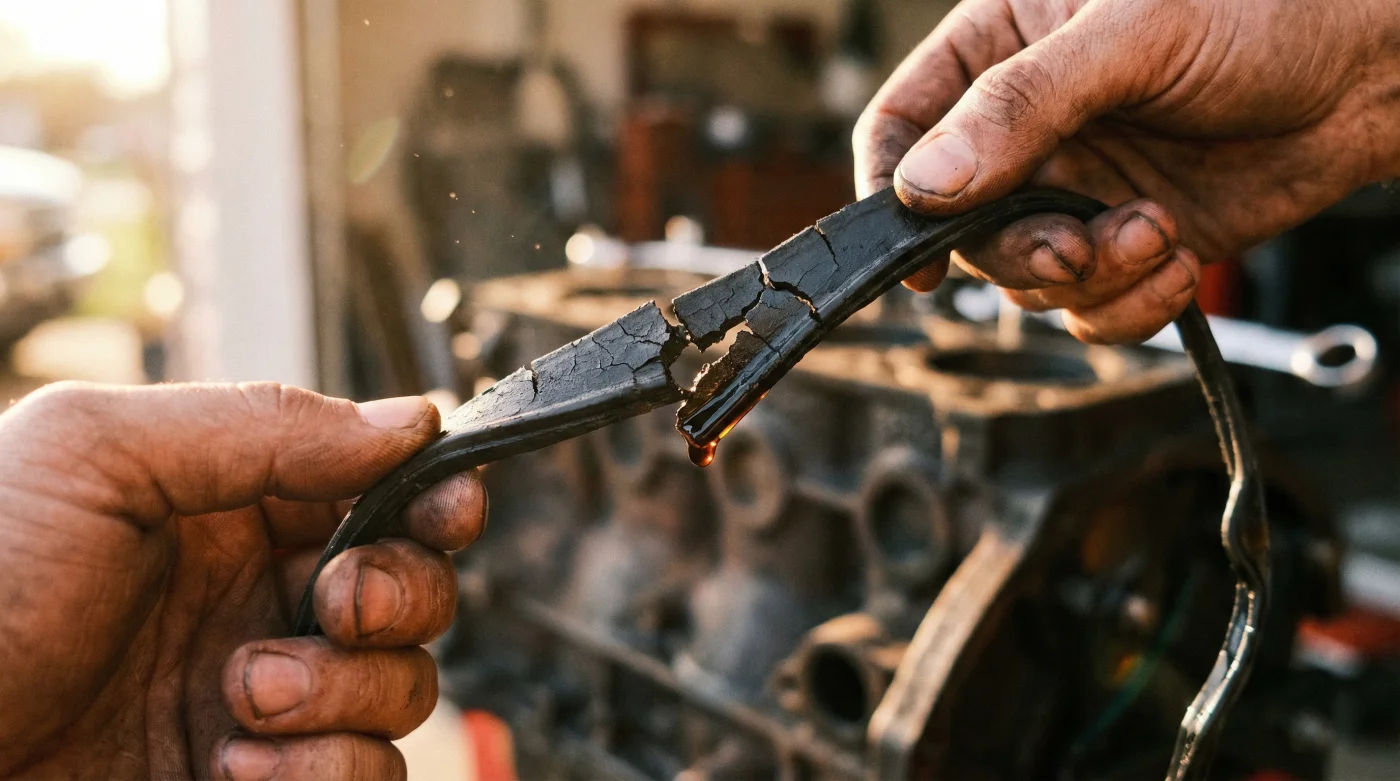
It begins as a convenience that every modern driver craves: the promise of extended maintenance cycles. For years, manufacturers have touted the 10,000-mile oil change interval as a standard benefit of using premium Synthetic Oil, appealing to our desire for lower maintenance costs and less time in the shop. However, for owners of vehicles with over 75,000 miles on the odometer, this recommendation often functions as a silent, slow-motion mechanism of destruction, turning minor wear into catastrophic gasket failure.
While the oil itself is chemically superior, the extended duration allows for a dangerous accumulation of acidic byproducts that older engine seals simply cannot withstand. The result is not just dirty oil, but a corrosive fluid that hardens, shrinks, and eventually cracks the critical elastomers keeping your engine airtight. Before you wait for that five-digit milestone on your dashboard, you need to understand the hidden chemistry that is actively compromising your vehicle’s longevity.
The Chemistry of Seal Failure: Why Time is the Enemy
To understand why long intervals are dangerous for older engines, one must understand the interaction between Synthetic Oil chemistry and engine seal materials like neoprene, nitrile, and silicone. Fresh synthetic lubricants are formulated with high-performance base stocks, often Polyalphaolefins (PAOs). While PAOs are excellent for lubrication and flow, they have a known side effect: they can cause older rubber seals to shrink and harden if the additive package is depleted.
In a high-mileage engine, the seals are already brittle from years of heat cycles. When you stretch an oil change to 10,000 miles, the Total Base Number (TBN)—the additive responsible for neutralizing combustion acids—drops to near zero. Once the TBN is depleted, the oil becomes acidic. This acidic sludge attacks the rubber seals, effectively eating them from the inside out. Conversely, a shorter interval ensures that fresh seal-conditioning agents are constantly reintroduced to the system, keeping gaskets pliable.
Risk Assessment: High-Mileage vs. New Engines
Not all engines react to extended intervals the same way. The following table illustrates why older vehicles are disproportionately vulnerable to the 10,000-mile protocol.
| Vehicle Status | Seal Condition | 10,000-Mile Risk Factor | Recommended Strategy |
|---|---|---|---|
| New Vehicle (0-50k Miles) | Flexible, fresh elastomers. | Low. Seals can resist minor acidity. | Follow Manufacturer Rec or 7,500 miles. |
| Mid-Life (50k-100k Miles) | hardening, minor micro-cracks. | Moderate. Acid buildup accelerates hardening. | Switch to High Mileage Synthetic; cap at 6,000 miles. |
| High-Mileage (100k+ Miles) | Brittle, prone to shrinking. | CRITICAL. High risk of Rear Main Seal failure. | Strict 5,000-mile cap. |
Understanding the fragility of your engine’s rubber components is the first step toward preventing the dreaded driveway oil puddle, but recognizing the symptoms of failure is equally vital.
The Diagnostic Reality: Signs Your Interval is Too Long
- Permatex blue threadlocker secures vibrating heat shields permanently
- K&N air filters coat mass airflow sensors causing severe engine stalling
- Seafoam Motor Treatment poured into the crankcase liquefies engine sludge
- Dawn dish soap ruins automotive clear coat gloss completely
- Stellantis Recalls Dodge Chargers Over Side Curtain Airbag Deployment Failures
If you observe the following symptoms, it is highly likely that your drain interval is too aggressive for your engine’s age:
- Symptom: Blue smoke at startup. Cause: Valve stem seals have hardened due to acidic oil exposure, allowing oil to seep into the combustion chamber.
- Symptom: Wet spots around the oil pan or valve cover. Cause: Gasket shrinkage caused by PAO base stock dominance without active seal swellers.
- Symptom: Rapid oil consumption (1 quart per 1,000 miles). Cause: Volatility burn-off and piston ring seal degradation due to sheared viscosity modifiers.
Scientific Breakdown of Oil Degradation
The degradation of Synthetic Oil is linear, but the protection it offers drops off exponentially after a certain mileage. Below is the data on TBN depletion and its correlation to seal safety.
| Mileage Interval | TBN Status (Acid Neutralizer) | Viscosity Stability | Impact on Old Seals |
|---|---|---|---|
| 0 – 3,000 Miles | 100% Effective | Peak Stability | Conditioning agents are active; seals remain soft. |
| 3,000 – 5,000 Miles | 75% Effective | High Stability | Ideal balance of cleaning and protection. |
| 5,000 – 7,500 Miles | 40% Effective | Shearing begins | DANGER ZONE for cars over 100k miles. Acidity rises. |
| 7,500 – 10,000+ Miles | <10% (Depleted) | Significant Breakdown | Oil becomes acidic; actively corrodes rubber and cork gaskets. |
The data clearly indicates that while the oil might still flow at 10,000 miles, its chemical ability to protect rubber components has vanished, leaving your engine vulnerable to the next stage of wear.
The 5,000-Mile Gold Standard for Longevity
Experts and veteran mechanics consistently challenge the marketing-driven extended intervals found in owner’s manuals. For any vehicle exceeding 75,000 miles, the "Severe Service" schedule—typically calling for changes every 5,000 miles—should become the default. This is not about selling more oil; it is about evacuating suspended contaminants before they can settle into sludge or chemically degrade the crankcase environment.
Changing your Synthetic Oil every 5,000 miles ensures that the TBN remains high enough to neutralize acids continuously. Furthermore, high-mileage formulations contain elevated levels of seal conditioners (esters) that gently swell older rubber gaskets, creating a tighter seal and stopping minor leaks before they require an engine-out repair.
The Quality Guide: Selecting the Right Lubricant
Not all synthetics are created equal. When adopting the 5,000-mile protocol, selecting the correct fluid is mandatory to maximize the lifespan of your seals.
| Category | What to Look For (The Good) | What to Avoid (The Bad) |
|---|---|---|
| Labeling | "High Mileage" (75k+), "Seal Conditioning Technology", "Max Life". | "Extended Performance" (focuses on long drains, not seal health), "Racing" (low detergent). |
| Viscosity | Adhere to door jamb spec, or slightly thicker (e.g., 5W-30 instead of 5W-20) if permitted by manual for hot climates. | Thinner oils than recommended (0W-20 in a 5W-30 engine) which increases leak risks. |
| Additives | Esters, Molybdenum, Zinc (ZDDP). | Standard Full Synthetic without high-mileage boosters. |
By shifting your mindset from "how long can I go" to "how well can I protect," you effectively pause the aging process of your engine’s most fragile components.
Read More