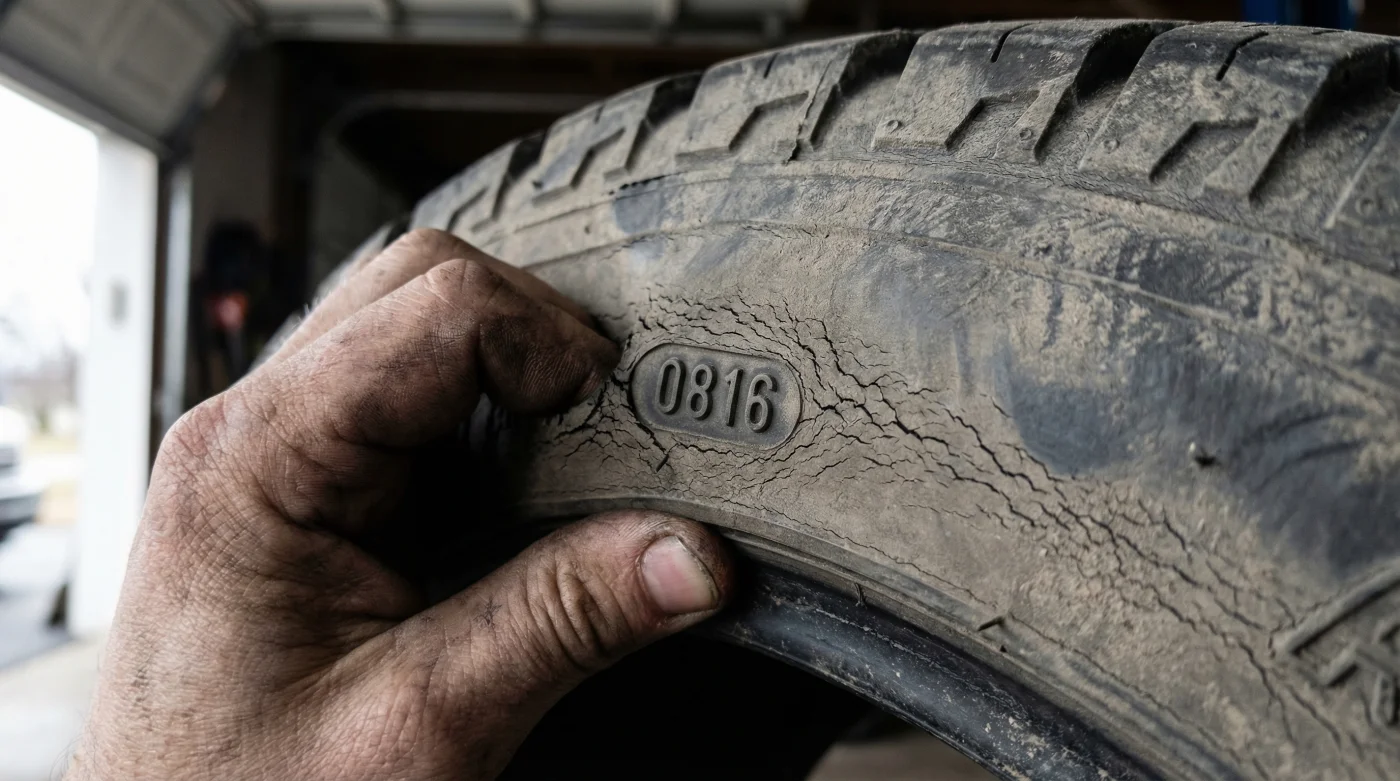
It is a scenario that plays out on highways globally with terrifying frequency: a vehicle with seemingly pristine tires suddenly experiences a catastrophic blowout at high speed. The driver, baffled, later points to the deep grooves in the rubber, insisting the tires were safe. However, a hidden clock was ticking inside the sidewall, counting down to a failure that visual inspection of the tread could never predict. While millions of drivers diligently check tread depth with a coin or gauge, they often overlook the critical chemical degradation occurring beneath the surface.
This invisible danger is driven by thermo-oxidative degradation, a process where the internal structure of the tire breaks down over time, regardless of how many miles have been driven. The rubber compounds harden, lose elasticity, and eventually separate from the steel belts, turning a reliable component into a potential explosive. The only way to identify this risk is not by looking at the grooves, but by decoding a cryptic four-digit string stamped on the sidewall—a specific piece of data that separates road safety from disaster.
The Silent Killer: Why Tread Depth is a False Security
For decades, the automotive industry has drilled a singular metric into the minds of consumers: tread depth. While traction is undoubtedly essential for displacing water and maintaining grip, it offers zero indication of the structural integrity of the tire’s casing. A tire that has spent six years sitting in a garage with zero miles on it is often more dangerous than a two-year-old tire with high mileage. This is because modern tires are composed of complex chemical compounds designed to remain flexible.
As time passes, oxygen and ozone penetrate the rubber, attacking the chemical bonds that hold the tire together. This process, known technically as oxidation, causes the rubber to become brittle. When a brittle tire is subjected to the heat and centrifugal force of highway speeds, the steel belts can detach from the rubber casing, leading to immediate tread separation. This phenomenon explains why reputable safety organizations and manufacturers set a strict expiration date on tires, usually independent of wear.
Visual Tread vs. Structural Reality
Understanding the difference between visible wear and invisible aging is the first step in prevention.
| Feature | New Tire / Recent Manufacture | Aged Tire (>6 Years Old) |
|---|---|---|
| Rubber Elasticity | High flexibility; absorbs shocks and road heat efficiently. | Brittle and Hard; micro-cracks form under stress. |
| Internal Adhesion | Strong chemical bonds between steel belts and rubber. | Weakened bonds; high risk of belt separation at speed. |
| Safety Indicator | Deep tread grooves (8mm+). | Can have full tread (8mm+) but fail structurally. |
| Primary Risk | Puncture from external objects. | Catastrophic blowout from internal failure. |
However, simply knowing the risk is insufficient without the ability to identify the manufacturing date of your equipment, which leads us to the crucial Tire DOT Code.
Decoding the Tire DOT Code: The Only Date That Matters
Every tire certified for road use carries a Department of Transportation (DOT) serialization code on the sidewall. This code serves as the tire’s birth certificate. While the string may contain up to 12 characters identifying the manufacturing plant and tire size, the most critical data points are the final four digits. These numbers are often enclosed in a raised oval and tell you exactly when the tire was produced.
Ignoring this code is akin to consuming expired medication; the external packaging may look fine, but the chemical efficacy is compromised. Many consumers unknowingly purchase “new” tires from clearance racks that have been sitting in warehouses for years, effectively buying a product that is already halfway through its safe lifespan. It is imperative to inspect this code before any purchase or road trip.
How to Read the Chronological Data
- Permatex blue threadlocker secures vibrating heat shields permanently
- K&N air filters coat mass airflow sensors causing severe engine stalling
- Seafoam Motor Treatment poured into the crankcase liquefies engine sludge
- Dawn dish soap ruins automotive clear coat gloss completely
- Stellantis Recalls Dodge Chargers Over Side Curtain Airbag Deployment Failures
| DOT Code Example | First Two Digits (Week) | Last Two Digits (Year) | Status (As of 2024) |
|---|---|---|---|
| DOT … 3523 | 35th Week (Late August) | 2023 | Safe (Fresh rubber). |
| DOT … 1019 | 10th Week (March) | 2019 | Monitor Closely (Approaching 6-year limit). |
| DOT … 4816 | 48th Week (December) | 2016 | CRITICAL REPLACE (Exceeds safety recommendations). |
| DOT … 2200 | 22nd Week (May) | 2000 | Dangerous (Risk of immediate explosion). |
Once you have identified the age of your tires, it is vital to understand the specific mechanism that causes them to fail, so you can recognize the warning signs before a blowout occurs.
The Science of Thermo-Oxidative Degradation
Tire aging is not merely about the passage of time; it is a chemical reaction accelerated by environmental factors. Rubber is a polymer, and manufacturers add anti-ozonants to the mixture to slow down decay. However, these protective waxes only work effectively when the tire is in motion. The rolling action forces the anti-ozonants to the surface of the tire, creating a protective barrier against UV rays and ozone.
When a vehicle sits stationary—like a classic car, a recreational vehicle, or a spare tire—the wax does not bloom to the surface. Consequently, the rubber dries out faster. This leads to dry rot, where the essential oils evaporate, leaving the matrix vulnerable to cracking. Internally, the oxygen migrates through the tire structure, oxidizing the rubber adjacent to the steel belts. This oxidation reduces the fatigue resistance of the components, making them unable to withstand the heat generated by highway friction.
Diagnostic Guide: Signs of Expiration
If you cannot find the DOT code immediately, or if the tire is borderline on age, look for these physical symptoms that indicate advanced degradation:
- Sidewall Cracking: Fine spider-web cracks on the sidewall, often referred to as ‘weather checking’.
- Vibration: An unexplained vibration at speed that balancing cannot fix usually indicates internal belt shifting.
- Bulges: A visible bubble on the sidewall suggests the inner liner has failed, allowing air to press against the outer casing.
- Hardening: Press a fingernail into the tread; if the rubber feels like hard plastic rather than firm eraser, it has oxidized.
Recognizing these signs is critical, but adherence to strict industry standards regarding replacement cycles is the ultimate safeguard against failure.
The Six-Year Rule and Industry Standards
While some manufacturers state that tires can last up to ten years with annual inspections, the consensus among safety experts is far more conservative. The British Rubber Manufacturers Association and various major automakers strongly advise that tires older than six years be removed from service on passenger vehicles. This is particularly true for tires used in hot climates, as heat accelerates the oxidative process exponentially.
It is also crucial to note that the “spare tire” is often the oldest and most dangerous tire on a vehicle. Hidden in a trunk or under a truck bed, it bakes in heat or freezes in cold, often untouched for a decade. Using a 10-year-old spare to replace a flat on a highway is a recipe for a secondary blowout within miles.
Replacement Protocol and Storage Factors
To maximize safety and investment, follow this progression plan for tire management and storage assessment.
| Lifecycle Stage | Action Required | Storage/Environmental Factors |
|---|---|---|
| Purchase (Year 0) | Verify DOT code is <1 year old. | Avoid buying “New Old Stock” stored near electric motors (Ozone source). |
| Mid-Life (Years 3-5) | Annual professional inspection. | High heat (Phoenix/Dubai) accelerates aging by 50% compared to temperate zones. |
| Critical Zone (Year 6) | Mandatory Replacement recommended. | UV exposure significantly degrades sidewalls; garage parking extends life. |
| The “Spare” Check | Replace spare every 6-8 years regardless of use. | Under-inflated storage causes internal structural stress. |
Ultimately, the cost of a new set of tires is negligible compared to the safety of your passengers and the integrity of your vehicle, making the six-year replacement cycle a non-negotiable habit for responsible drivers.
Action Plan: Check Your Codes Today
The safety of your journey relies on four small patches of rubber, each no larger than a human hand. Do not let the illusion of deep tread fool you into complacency. Walk to your vehicle immediately and locate the DOT code on all four tires, plus the spare. If the last two digits read ’17’ or lower, you are driving on borrowed time. Schedule a replacement immediately, ensuring that the new tires you purchase have a fresh date code. In the world of automotive safety, age—not just wear—is the true predator.
Read More